
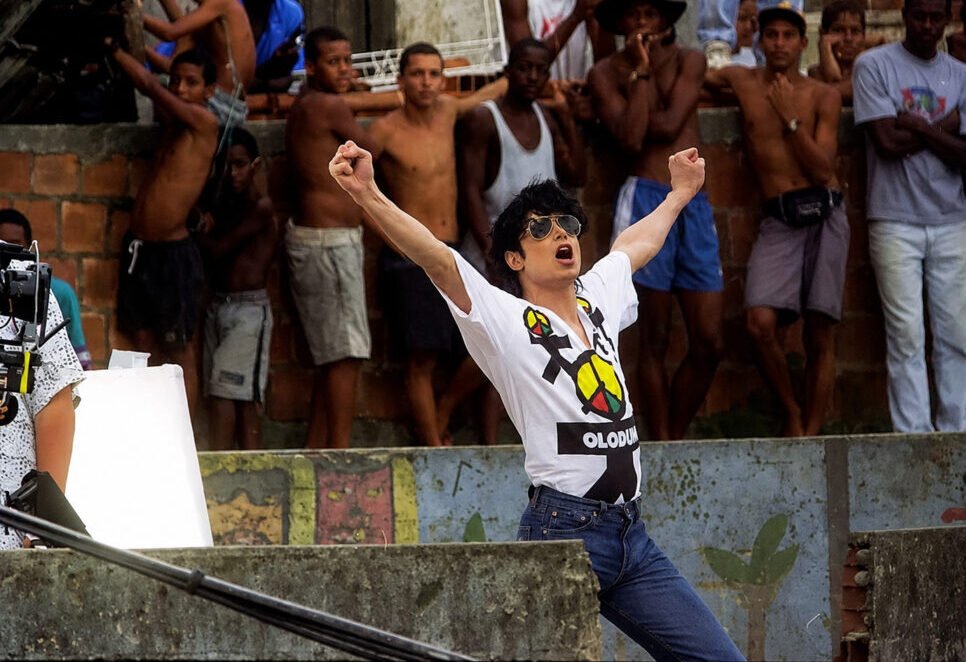
The newly released biopic Michael has reignited global fascination with Michael Jackson, bringing a new generation back into the orbit of one of the most influential artists in music history. As audiences revisit his career, performances and personal life, many fans are also rediscovering an unexpected chapter of his story: how Michael Jackson fell in love with Brazil.
Long before international artists routinely chose Brazil as the backdrop for music videos, cultural collaborations and global tours, Michael Jackson had already developed a deep connection with the country. From filming the iconic “They Don’t Care About Us” video in Salvador and Rio de Janeiro to working closely with Brazilian musicians and even embracing Brazilian cuisine, the King of Pop built a relationship with Brazil that went far beyond a single visit.
The iconic “They Don’t Care About Us” video in Brazil
If there is one moment that forever linked Michael Jackson to Brazil, it was the filming of “They Don’t Care About Us” in 1996.
Released on the album HIStory: Past, Present and Future, Book I, the song addressed racism, inequality, institutional violence and social exclusion. Michael envisioned the track as something bigger than a pop single. He wanted real imagery, real people and real social tension. To bring that vision to life, he once again teamed up with filmmaker Spike Lee.
Brazil became central to that vision.
For Michael and Spike Lee, the country represented both extraordinary cultural richness and profound social contrasts. Salvador, especially the historic Pelourinho district in Bahia, embodied that duality through its Afro-Brazilian heritage, music and street energy.
Rather than simply using Brazil as scenery, Michael placed Brazilian culture at the center of the project.
Michael Jackson and Olodum
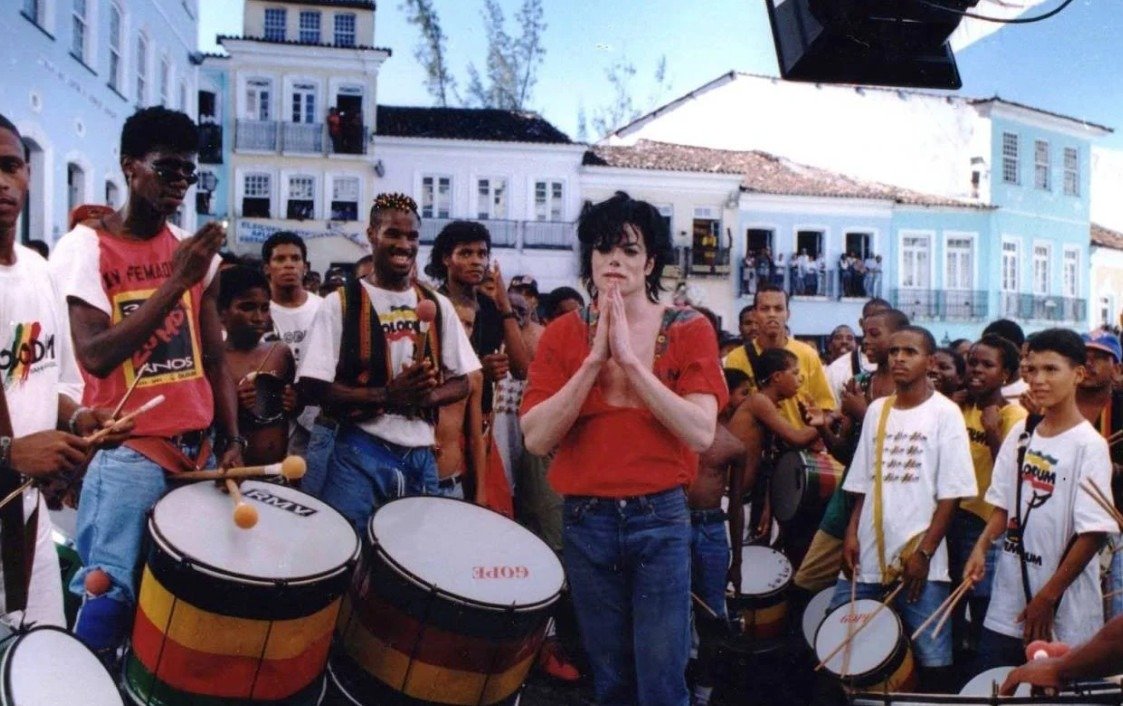
The participation of Olodum transformed the video into a cultural landmark.
The percussion group, internationally known for its samba-reggae rhythms and Black cultural activism, brought a distinctly Brazilian identity to the track. Their drums became one of the defining elements of the song’s sound and visuals.
For many members of Olodum, the experience was life-changing.
Percussionist Bira, who participated in the shoot, later recalled the surreal atmosphere surrounding Michael’s arrival in Pelourinho. According to him, there were strict rules forbidding musicians from touching, speaking to or asking the singer for autographs. Yet during filming, an improvised dance interaction emerged naturally between the two performers.
There was no rehearsal, choreography or script for that specific moment — only energy, rhythm and spontaneity.
The result became one of the most memorable sequences in Michael Jackson’s videography.
The Santa Marta favela became part of pop culture history
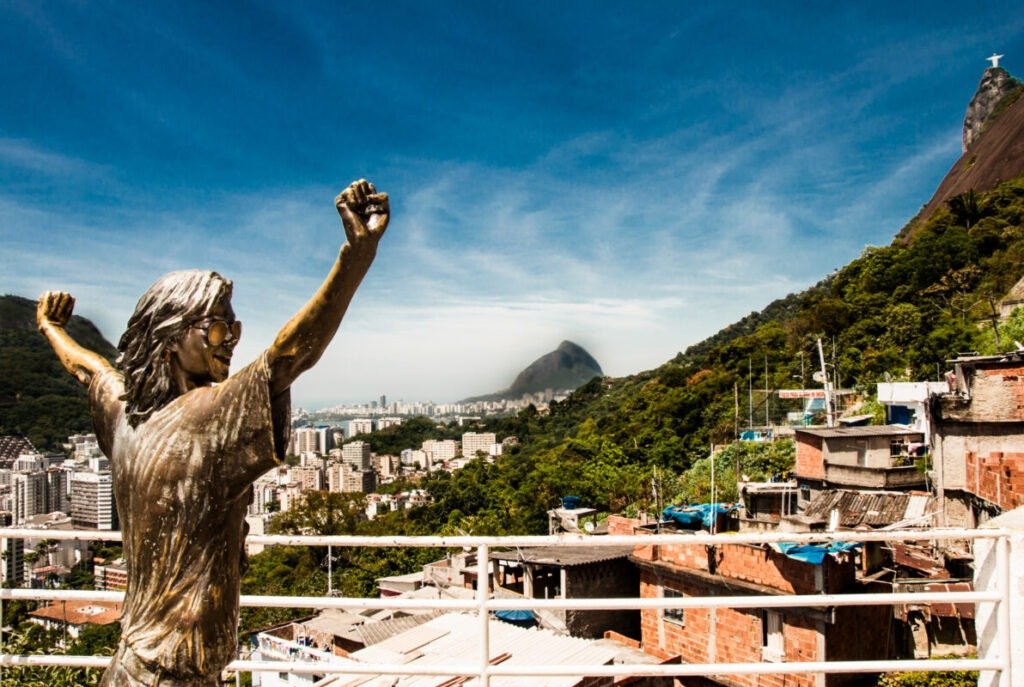
Beyond Salvador, Michael also filmed in Rio de Janeiro — including scenes inside the now-defunct Frei Caneca prison and the Favela Santa Marta.
At the time, the decision generated controversy.
Brazilian authorities reportedly worried that showing a favela to the world could damage the country’s image internationally. Michael Jackson and Spike Lee disagreed. The goal of the video was precisely to show marginalized communities as protagonists rather than invisible spaces.
Instead of isolating himself from residents, Michael filmed surrounded by children, dancers and locals on top of the hill, turning Santa Marta into one of the emotional centers of the video.
Years later, the community embraced that moment as part of its identity. A statue of Michael Jackson was installed at the exact filming location, transforming the site into an enduring tourist attraction and cultural landmark in Rio.
Michael Jackson loved Brazilian food
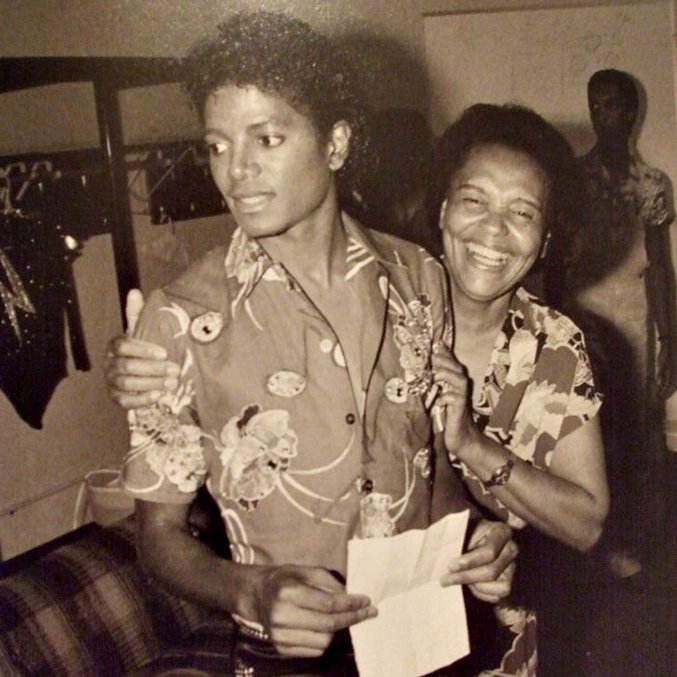
One of the lesser-known Brazilian influences in Michael Jackson’s life came through food.
The singer developed a strong bond with Brazilian chef Raymunda Vila Real, better known as Dona Remy.
Born in the state of Minas Gerais, Remy started cooking as a child and eventually worked for Brazilian politicians and presidents before moving to the United States through connections with Sérgio Mendes.
In Los Angeles, her cooking attracted major celebrities, eventually leading her to producer Quincy Jones — the legendary collaborator behind Michael Jackson’s Thriller era.
Quincy reportedly told Remy that Michael rarely ate during visits and was extremely selective with food. Remy decided to prepare healthy Brazilian dishes adapted to his diet.
The result surprised everyone.
According to her own recollections, Michael ate multiple plates of black beans, rice, collard greens and farofa during their first meal together.
From that moment on, Dona Remy became a recurring presence in Michael’s life during the early 1980s, even accompanying him during periods of touring and difficult moments in his career.
Reports from people close to the singer described her relationship with Michael as almost maternal. Beyond cooking, she became a comforting and trusted figure behind the scenes.
Among the dishes Michael reportedly loved most was feijoada — adapted in lighter versions for his vegetarian preferences.
Brazilian musicians helped shape Michael Jackson’s sound

Brazilian influence also appeared directly in Michael Jackson’s music.
Legendary percussionist Paulinho da Costa collaborated extensively with Michael Jackson throughout his solo career. Widely considered one of the most recorded percussionists in music history, Paulinho contributed to multiple Michael Jackson albums and recordings.
According to musicians who worked with the artist, Michael admired Paulinho’s ability to inject Brazilian rhythmic sophistication into pop music.
That subtle Brazilian percussion became part of the sonic identity of several of Michael’s biggest hits.
When the King of Football Met the King of Pop
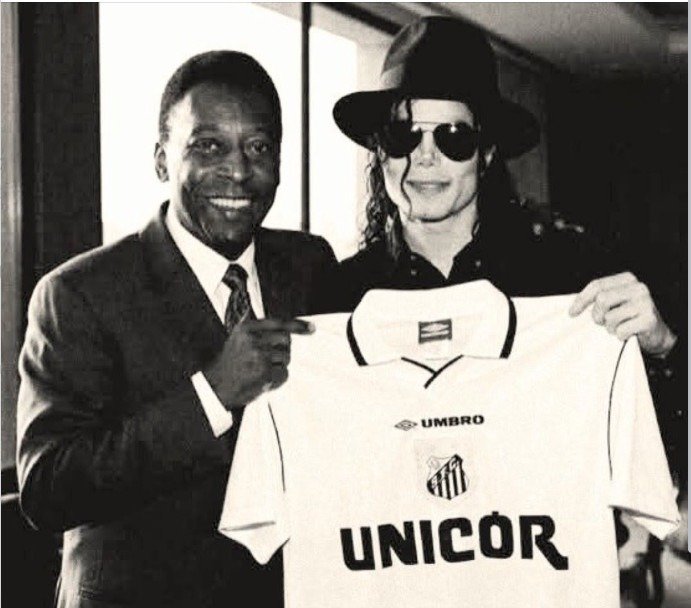
One of the most symbolic moments connecting Michael Jackson to Brazil happened in 1998, in New York, when Pelé met Michael Jackson in person.
During the encounter, Pelé — widely known as the “King of Football” — gifted Michael Jackson an official Santos FC jersey, creating a memorable meeting between two of the most globally recognizable cultural icons of the 20th century.
The moment reinforced Michael’s fascination with Brazilian football culture, something that had already surfaced years earlier.
According to a 1984 report from Jornal do Brasil, a representative from Michael Jackson’s touring team visited São Januário stadium with a special request: five autographed jerseys from CR Vasco da Gama signed by club legend Roberto Dinamite.
The explanation was simple: whenever traveling internationally, Michael reportedly liked collecting shirts from famous football clubs around the world, and he and his brothers occasionally wore them publicly.
Even Brazilian football eventually became part of Michael Jackson’s orbit — culminating in the unforgettable meeting between the two Kings.

