Every visitor to Rio de Janeiro eventually faces the same scene. It is late, you are hungry, and the boardwalk is lined with laminated menus in five languages, photos of shrimp platters and a waiter waving you in. You sit down. The food is fine. And somewhere a few blocks away, in a boteco with plastic chairs on the sidewalk, cariocas are eating the meal you came to Rio for.
Rio is one of the great food cities of South America, but it doesn’t make that obvious. Its best cooking is spread across dozens of neighborhoods, much of it in modest bars and decades-old institutions that rarely top review apps. Online lists repeat the same handful of names. Social media favors what photographs well. And ratings rarely tell a tourist restaurant from a place locals have loved for fifty years.
That is why we created the Brazilcore Rio Restaurant Guide: 150+ restaurants, botecos, bakeries, beach kiosks and fine-dining tables across over 20 neighborhoods, each one chosen for a reason and explained for international travelers. Here is what you should know about how Rio eats — and how to use the guide to build a trip where every meal counts.
How Rio really eats
To eat well in Rio, it helps to understand that the city’s food culture happens less in formal dining rooms than at the bar counter, on the sidewalk and on the sand.
The boteco is the heart of it. Descended from the Portuguese-run corner stores and bars of the early 20th century, the boteco (or botequim) is where Rio socializes: tiled walls, a long counter, tables spilling onto the sidewalk. Some are a century old, like Armazém Senado in Centro, where samba still spills into the street. Others, like Jurema in Lapa or Bar da Frente near Maracanã, belong to a new generation of cooks reinventing the classics.
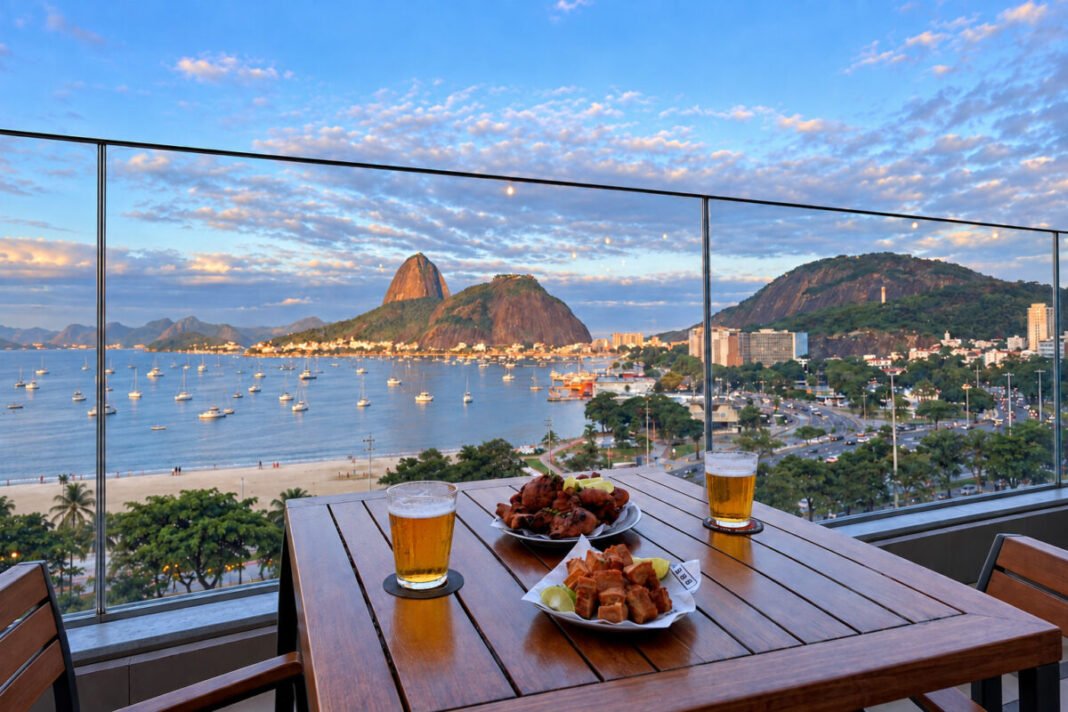
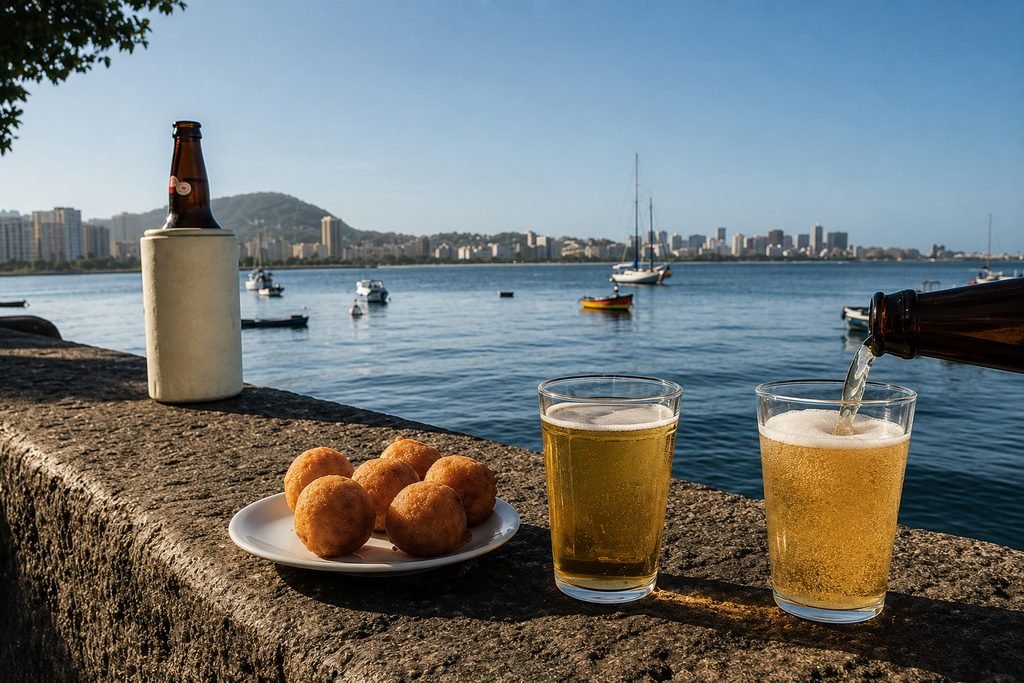
Chopp and petiscos come together. Chope is draft beer, poured very cold in small glasses so it never warms in the heat. It comes with petiscos, bar snacks that often become dinner: bolinhos de bacalhau (cod fritters, a Portuguese inheritance), pastéis, croquettes and empadas. At Pavão Azul in Copacabana, the cod fritters alone justify the trip.
Feijoada is a ritual, not just a dish. Black beans slow-cooked with cuts of pork, served with rice, farofa, sautéed collard greens and orange slices. In Rio, it is traditionally eaten on Saturdays, over a long lunch, often with live samba. At Aconchego Carioca, the whole dish is folded into a fried croquette, the bolinho de feijoada.
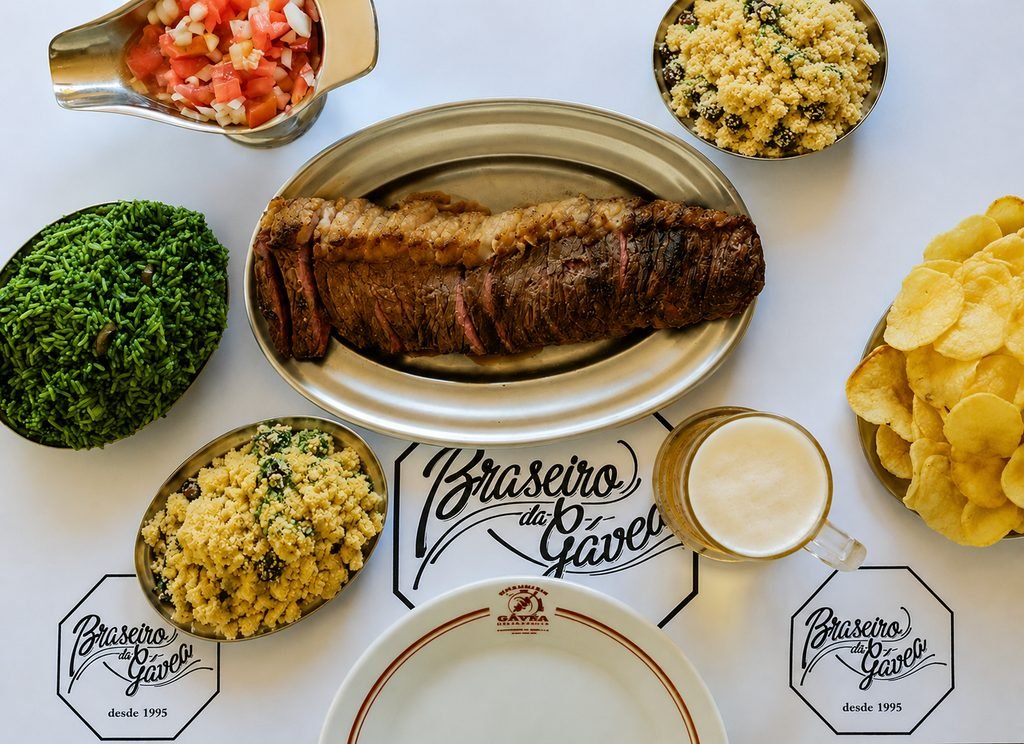
Fire is its own language. Churrasco arrived from Brazil’s southern ranching country and became a national passion. At a rodízio like Churrascaria Palace, waiters circle the room with skewers of picanha, Brazil’s signature cut, until you flip your card to red. Rio also has its own tradition of galeto, young chicken grilled over charcoal, best experienced at a bohemian counter like Galeto Sat’s.
Bakeries and confectioneries are part of daily life. From a morning pão na chapa (buttered bread pressed on the griddle) and a cafezinho to the Belle Époque pastries of Confeitaria Colombo, bakeries shape the carioca day.
The beach is a dining room, too. Vendors walk the sand with mate (iced tea) and Biscoito Globo, the airy manioc crackers every carioca grew up with. Beach kiosks serve fresh seafood with live music, and juice bars like Bibi Sucos, which helped define the city’s healthy-living habits, turn tropical fruit into a daily ritual.
And Rio is a city of immigrants. Portuguese, Middle Eastern, German, Italian and Japanese communities all left their mark: esfihas at the Rotisseria Sírio Libaneza in Catete, German cooking at Bar Brasil in Lapa, a century-old institution, and izakaya-style plates at Miudinho, near Maracanã.
Why a plan beats wandering
Most disappointing meals in Rio aren’t bad luck. They are the result of deciding at the last minute, hungry, tired and in an unfamiliar neighborhood. That is exactly when tourist traps win: they are visible, open and right in front of you.
The fix is simple. Decide before you’re hungry. A few minutes of planning turns a vague “let’s find something” into a short list of places worth the detour.
That is how the Brazilcore guide is designed to work:
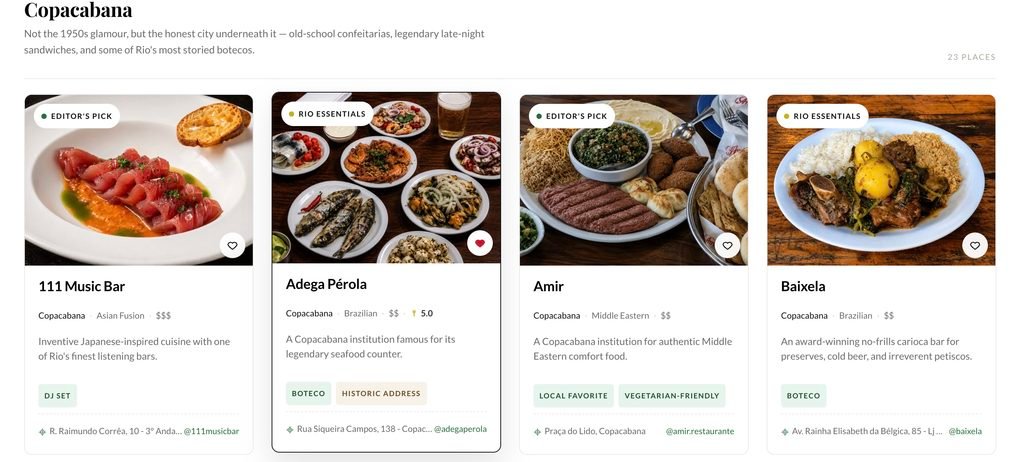
- Save your favorites as you read. Every entry has a Save button. Tap it on the places that catch your eye, and they gather in your own Saved list, ready when you need them.
- Build the trip around neighborhoods. Rio is large, and traffic is real. The guide is organized by neighborhood, with a map, so you can match meals to where you’ll already be: lunch near your morning hike, dinner near your hotel, a drink by the beach at sunset.
- Start from a collection when time is short. Editor’s collections such as Rio Essentials, Brazilian Classics, Fire & Grill, Beachfront Dining, Scenic Views and Late Night Eats group places by experience.
- Know what you’re ordering. A built-in glossary explains the dishes and terms you’ll see on Brazilian menus, from farofa to chope.
The result is your own itinerary: not a generic top-ten list, but a handful of places chosen for your trip, your budget and your taste.
Plan around the moment
Many trips to Rio are built around an event: a match, a concert on the beach, a night of samba. Those are also the nights when the city is most crowded and the tourist traps are busiest.
The classics are usually close by. Before a game at Maracanã, the botecos of Tijuca, such as Salete and Bar da Frente, are a short walk away. After a show on Copacabana Beach, a block or two inland you’ll find Cervantes and Galeto Sat’s. And a night of samba in Lapa pairs well with Nova Capela or the century-old Bar Brasil. All of them, and many more, are in the guide.
Inside the Brazilcore Rio Restaurant Guide
The guide was researched and curated by the Brazilcore team, drawing on journalistic reporting, respected gastronomic references and years of eating in the city. It is selective by design: every place has to earn its spot, whether it is a Michelin-recognized tasting menu or a counter that has served the same croquette for decades.
- 150+ places in over 20 neighborhoods, from Leblon and Ipanema to Tijuca, Lapa, Santa Teresa and Barra da Tijuca.
- Every budget and format: botecos, bakeries, beach kiosks, churrascarias, late-night institutions and fine dining.
- Editor’s collections for when you’re short on time, including Rio Essentials, Near Maracanã and Late Night Eats.
- Filters by neighborhood, cuisine and meal, a map, a glossary of Brazilian food terms, and a Saved list for building your itinerary.
- Written in English, with automatic translation into Portuguese, Spanish and French.
- One year of access for $19, including every update published during that time.
You may not eat everywhere in Rio. But every place you choose from the guide should be worth one of your limited meals in the city.