
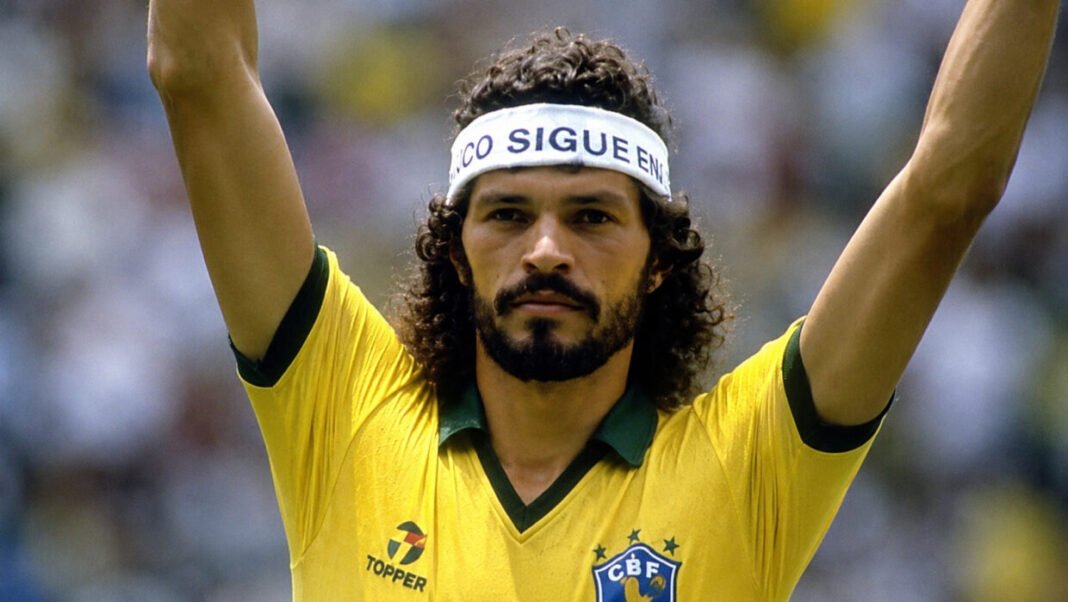
On Saturday, June 13, 2026, a few hours before Brazil faced Morocco in their World Cup opener, New York Mayor Zohran Mamdani posted a video to social media that nobody saw coming.
It wasn’t about traffic, though that’s how it began. It was about Sócrates.
“I’ve been thinking a lot about Sócrates,” Mamdani said, looking into the camera. “Not the Greek philosopher, the Brazilian midfielder.”
For the American audience, it was an unfamiliar name. For Brazilians who grew up watching that team play, it hit hard. The mayor of the largest city in the United States was reviving a story that many people, including in Brazil, may have started to forget.
It’s worth recovering together.
Who Sócrates was
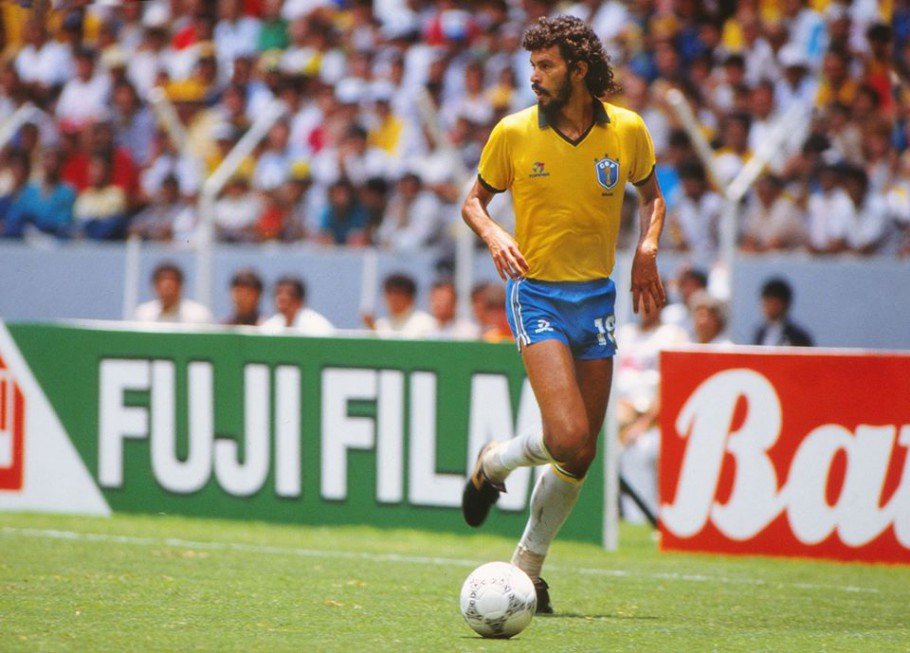
Sócrates Brasileiro Sampaio de Souza Vieira de Oliveira was born on February 19, 1954, in Belém, in the Brazilian state of Pará. His father, a passionate reader, named him after the Greek philosopher Socrates and gave him the middle name Brasileiro — literally “Brazilian.” It would prove fitting. Few players would come to embody the country’s contradictions, ideals, and aspirations as completely as he did.
He grew up in Ribeirão Preto, a city in the interior of São Paulo. He earned a medical degree before turning professional and never fully left the profession behind. His teammates called him Doutor — the Doctor.
Football ran deep in the family. His younger brother, Raí, would later become one of Brazil’s most celebrated players, captaining São Paulo FC and helping Brazil win the 1994 World Cup.
As a player, he was hard to classify. Too tall for a classic midfielder, too slow for a modern attacker, too thin to withstand the brutal defenders of his era. None of that mattered much when he stepped onto the pitch. Sócrates played with an intellectual elegance that didn’t depend on pace. He read the game two passes ahead of everyone else. He had a precise touch, a powerful long-range shot, and the famous backheel pass that became his signature.
But what made Sócrates a name beyond football wasn’t his technique. It was what he built off the pitch.
Brazil in 1981
To understand what happened at Corinthians that year, you need to understand what country it was happening in.
Brazil was in the seventeenth year of the military dictatorship that had seized power in 1964. The repression had killed, tortured, and exiled thousands of Brazilians through the 1960s and 1970s. The press was censored. Political parties were controlled. Direct elections for president, state governor, or capital-city mayor simply did not exist.
In 1979, the regime had announced a “slow, gradual, and safe opening.” It was the beginning of the end, but the end still felt far away. In 1984, a movement called Diretas Já — Direct Elections Now — would mobilize millions of Brazilians in the streets and be defeated in Congress. The country would wait five more years before voting freely.
It was in this context that a football team in São Paulo decided to do something nobody had done before.
The Corinthians Democracy
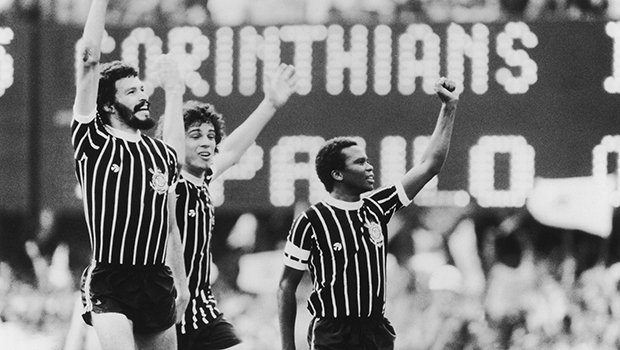
In 1981, Corinthians underwent an internal restructuring that would change the club and, in some ways, Brazilian football itself. Under the presidency of Waldemar Pires, with sociologist Adilson Monteiro Alves as football director, the team adopted a management model no professional club in the world practiced: every internal decision would be put to a vote, and every vote would carry equal weight.
The star striker voted. The backup voted. The massage therapist voted. The guy who washed the uniforms voted. Training schedules, pre-match routines, signings, behavior on trips — everything went through the assembly.
Sócrates became the face of the movement. Team captain, doctor, articulate, tall, bearded, with a physical presence that matched the strength of the ideas, he became a reference point inside and outside the club. Alongside him were Wladimir, Casagrande, Biro-Biro, Zé Maria, and Zenon — all politicized leaders who understood what was being built.
And built by choice, not by accident. Sócrates often said the Corinthians Democracy was a practical experiment: if a football team, with all its traditional hierarchy, could function democratically, then an entire country could too.
The jerseys that carried messages
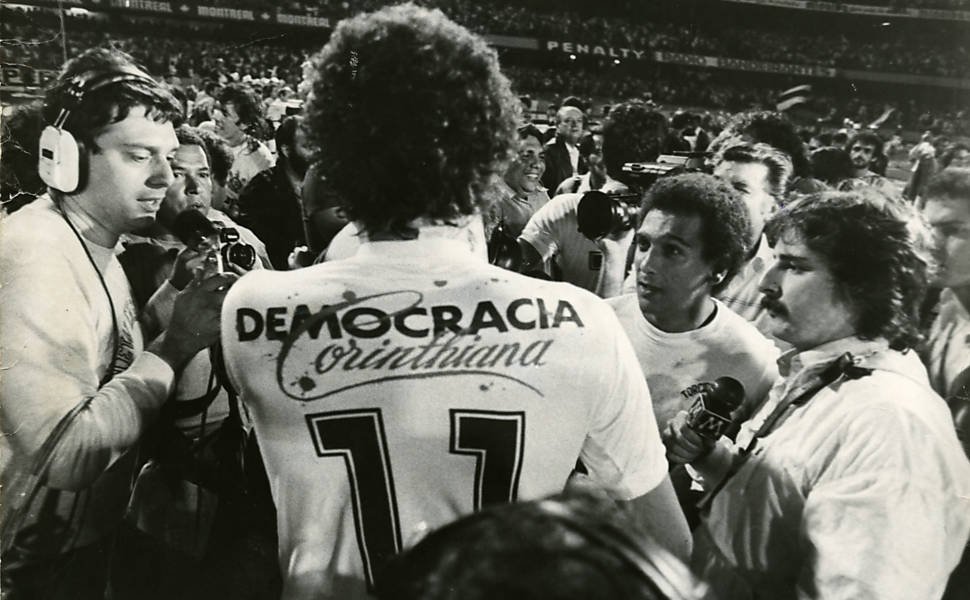
Corinthians didn’t stop at the internal assembly. They took the idea onto the pitch, literally.
In 1982, the team played with the word DEMOCRACIA stamped on the back of the jerseys, replacing the player’s number. In other matches, phrases appeared like Dia 15 vote — “Vote on the 15th” — ahead of the November 1982 elections, the first direct elections for state governor in nearly two decades.
And in 1984, at the peak of the Diretas Já movement, Sócrates and his teammates walked onto the pitch wearing jackets that read Eu quero votar para presidente — “I want to vote for president.”
It was a football team campaigning politically inside a stadium, during a military regime. There was no precedent. There was no sequel. It was a singular moment in the history of world sport.
The price and the legacy
The Corinthians Democracy was short-lived. In 1984, Casagrande left for São Paulo FC and Sócrates transferred to Fiorentina in Italy. Without its central leaders, the experiment lost momentum and was gradually dismantled.
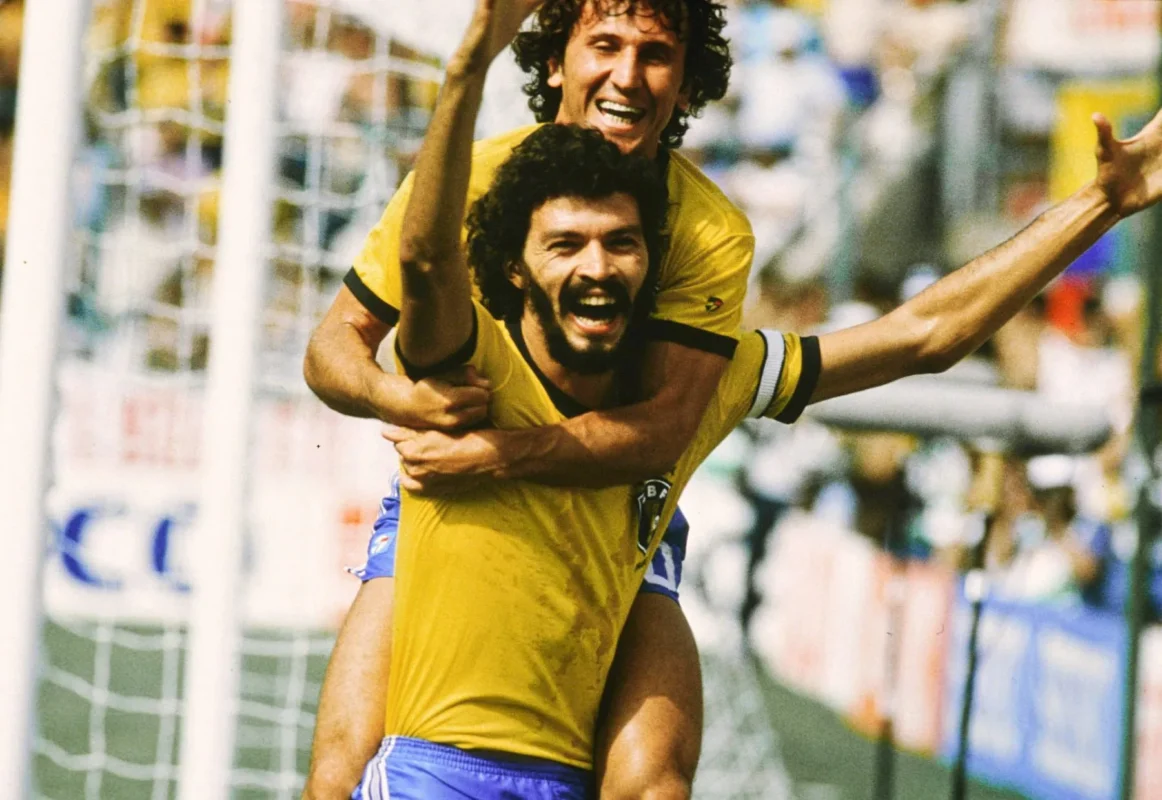
Corinthians won three São Paulo state championships during the period (1982, 1983, 1988) and, in 1990, lifted their first ever Brazilian championship. Sócrates played in the 1982 World Cup, widely considered one of the most beautiful tournaments in football history even though Brazil didn’t reach the final. He captained that team, alongside Zico, Falcão, and Júnior.
He returned to Brazil, played for Flamengo, Santos, and other smaller clubs. He kept commenting publicly on politics, football, and society. He wrote newspaper columns. He wrote books. He drank too much, smoked too much, lived intensely in ways he never tried to hide.
Sócrates died on December 4, 2011, at age 57, in São Paulo, from a systemic infection compounded by years of alcohol abuse. He asked, before dying, that his body be cremated quietly. The request was not honored. The wake was public, and thousands of fans came to say goodbye.
Why Mamdani brought it back
Nearly fifteen years after Sócrates died, the mayor of New York chose to invoke him in an unlikely moment: an institutional video about traffic during the World Cup.
Mamdani, who took office in January 2026 as the first Muslim mayor in the city’s history and the youngest since 1892, knew what he was doing. He used the World Cup as a hook to speak about something larger: football as a political tool.
“These were difficult years for Brazil,” he said in the video. “A repressive military dictatorship ruled the country, imposing its will by force. At Corinthians, the club he captained, Sócrates and his teammates took part in what every ordinary Brazilian dreamed of: democracy. They began an experiment in self-government called Corinthians Democracy. Whether you were the team’s star striker or the laundry worker, everyone had an equal vote.”
And he closed with the line that went viral immediately: “Football has created movements, helped take down dictators, and for 90 minutes, it didn’t just let us forget our problems. It also helped us find ways to overcome them. What a beautiful game.”
What this reveals
There’s something striking about a 34-year-old American politician, raised on another continent, recovering with such precision the story of a Brazilian experiment from the 1980s. It shows that the Corinthians Democracy, however brief, however ultimately defeated, left enough of a trace to cross decades and borders.
It also reveals something about Brazilian football that often gets left out of official narratives: the sport has never been only about beauty. The same game that produced Pelé, Zico, and Ronaldinho also became a space for civic imagination. During the military dictatorship, it offered a glimpse of democracy. Today, it continues to serve as one of Brazil’s most powerful arenas for debates about identity, belonging, and the future of the country.
The 2026 World Cup started with Brazil drawing 1-1 with Morocco at MetLife Stadium. It wasn’t a memorable debut. But maybe the most important thing about that Saturday didn’t happen on the pitch. It happened in the video posted by a New York mayor who decided to remind the world that Brazilian football has a history that goes far beyond five World Cup titles.
Sócrates died fifteen years ago. But on that Saturday, he was back in the game.