
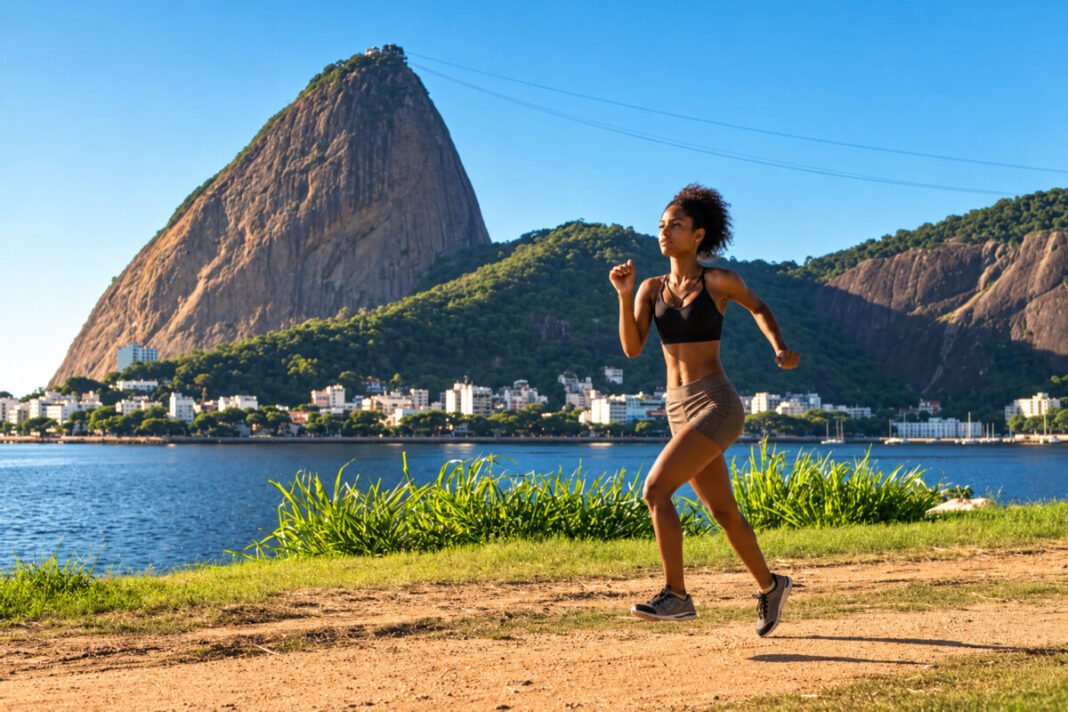
Rio de Janeiro has claimed back-to-back titles as South America’s leading beach destination and, for the tenth time since 2015, its leading destination for sports tourism — a double win at the 2026 World Travel Awards that says as much about where Rio is headed as it does about its coastline.
The sports-tourism title is the real story here. Beating Fernando de Noronha, the Galápagos and Colombia’s San Andrés for best beach is a familiar kind of win for Rio. Being named South America’s top sports destination for the tenth time in just over a decade is not — it’s a track record few cities anywhere can claim, and it points to a shift that has little to do with Ipanema’s sand.
What the World Travel Awards Actually Measure
Founded in 1993, the World Travel Awards is the industry’s closest thing to an Oscars ceremony — categories judged across destinations, hotels, airlines and tour operators, with winners drawn from public voting rather than editorial selection. That matters for how to read Rio’s win: it reflects reputation and traveler sentiment as much as any single season’s numbers.
The context behind the sports title is concrete. Between January and September 2026, 36 percent of the 579 events on Rio’s calendar were tied to sports, and in September the city hosted its first-ever NFL game. That volume of sport-driven programming — not just marquee events, but a steady calendar of them — is what the award is tracking.
Why Rio Keeps Winning This Category
The streak has momentum behind it. Rio is already confirmed to host the opening match and the final of the 2027 Women’s World Cup at the Maracanã — the stadium that has defined the city’s sporting identity since 1950 — which all but guarantees the sports-tourism title stays in play for another cycle. Visit Rio, the city’s tourism board, has leaned into that pipeline deliberately, treating major sporting fixtures as a complement to — not a replacement for — the beach-and-Carnival image most international visitors still arrive with.
It’s a useful corrective for anyone who still pictures Rio primarily in terms of swimwear and samba: this is a city actively building a second identity as a serious host for global sport, with the infrastructure and calendar to back it up.
The Wins Rippled Through Rio’s Hospitality Scene
The destination awards weren’t the only wins for the city. Among Visit Rio’s member properties and partners honored in the same ceremony: Fasano Rio de Janeiro, in Ipanema, was named Brazil’s Leading Boutique Hotel; Copacabana Palace, A Belmond Hotel, took Brazil’s Leading Hotel; and Passion Collection won Brazil’s Leading Tour Operator. Pier Mauá, the city’s cruise terminal, was separately named Best Cruise Terminal in Latin America at the World Cruise Awards, a sister program under the same umbrella.
Taken together, the sweep reads less like a single headline and more like confirmation across categories — from where visitors stay to how they arrive — that Rio’s tourism infrastructure is being recognized as a complete system, not just a backdrop.
What to Watch Next
With the Women’s World Cup final already on the calendar for 2027, Rio has every reason to keep showing up on this list. For now, the award is a reminder that the city’s appeal to international travelers has as much to do with what’s happening on its fields and courts as what’s happening on its beaches.