
On the night of June 16, in Kansas City, Lionel Messi walked onto the field for the 200th time in an Argentina shirt and scored three goals against Algeria. He is 38, with retirement in sight, yet he played like a man who still has something to prove. Argentina’s fans, thousands of miles from Buenos Aires, chanted his name like a prayer.
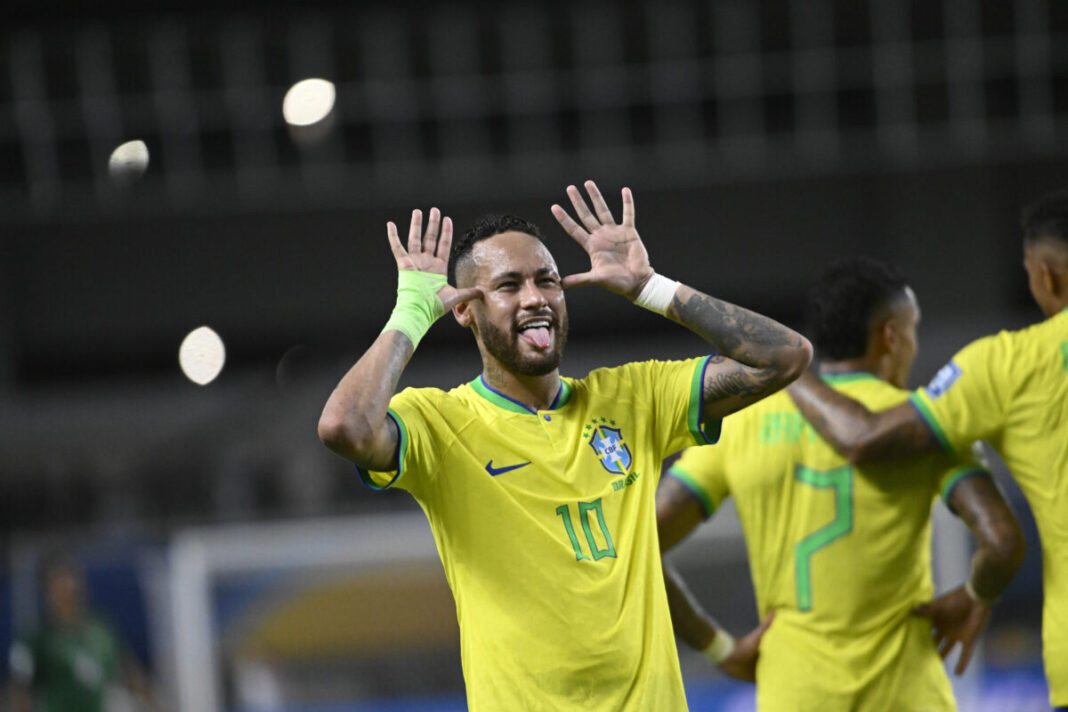
Days earlier, in the same 2026 World Cup, Neymar watched from the sidelines in his training kit as Brazil drew with Morocco, kept out by a calf injury. Two South American geniuses living the same tournament in opposite ways. One at the center of everything. The other on the edge of it.
The scene captures a question that has followed Brazilian football for years. Why has Brazil never loved and worshipped Neymar the way Argentina learned to love Messi? The answer says less about the two players than about how each country decides who deserves to be an idol.
The weight of being the country of football
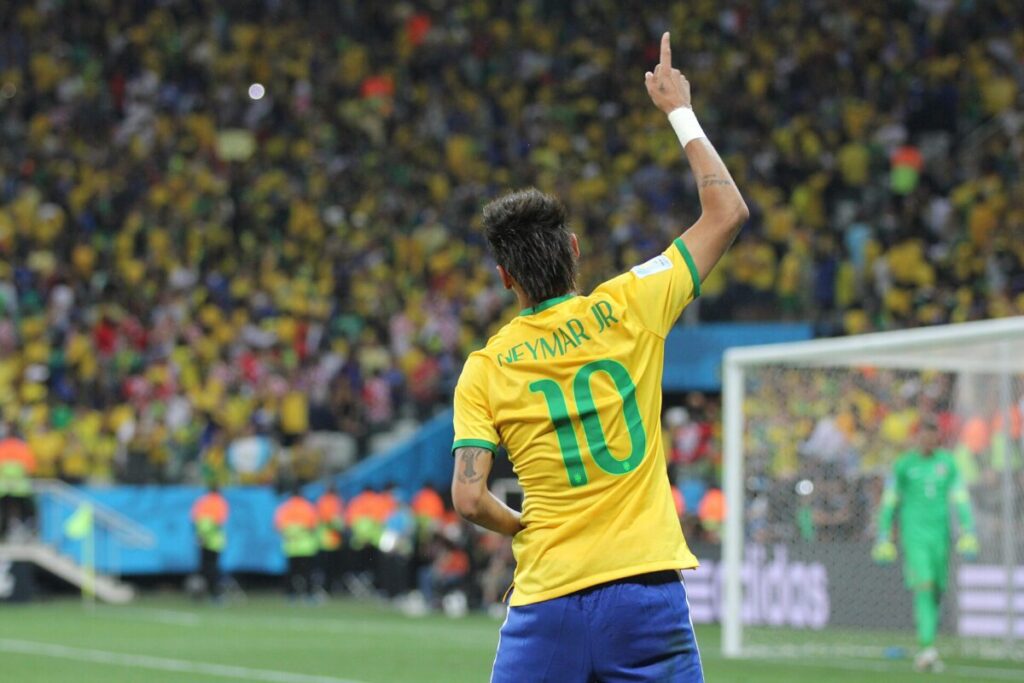
In Brazil, football is not weekend entertainment. It is language, identity, culture, a way of explaining the country to itself. Pelé built that mythology and turned it into something close to a religion. Five World Cup titles, the idea of jogo bonito, the beautiful game, the belief that Brazilians play with a grace no one else has. The last trophy came in 2002. Since then the country has lived through a drought of more than twenty years, and every new generation arrives carrying the job of returning Brazil to the place it believes is its own.
That inheritance, naturally, turned into a demand. Wearing the yellow shirt is not only about winning. You also have to enchant, and you have to do it with humility, as if your talent were almost a debt owed to the nation.
Pelé died at the end of 2022. Less than a year later, Neymar passed his mark as the national team’s all-time top scorer, with 79 goals. The heir reached the number. He never inherited the love, or the trophies that should have come with it.
The talent Brazil never forgave
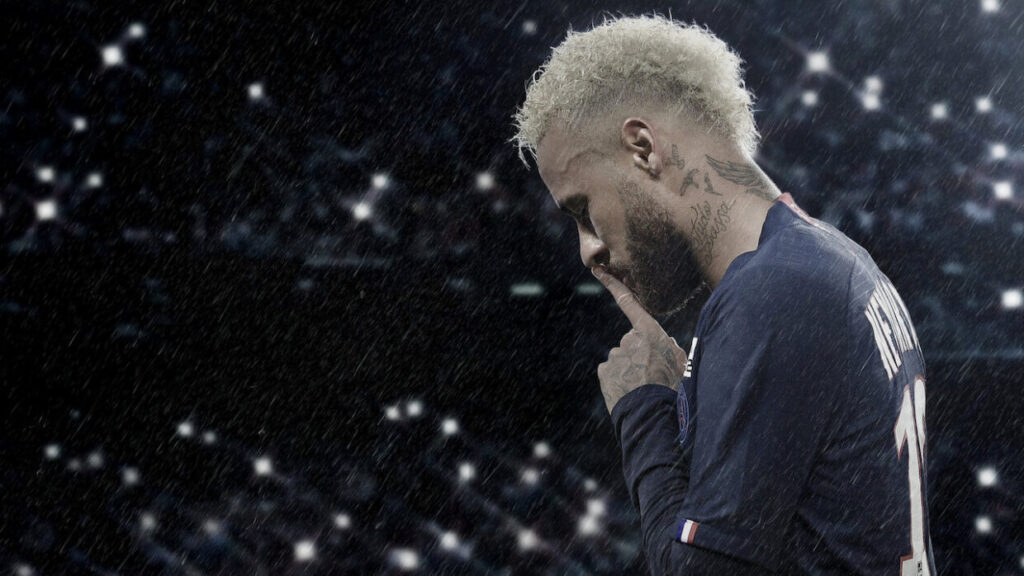
Neymar had everything he needed to be the natural successor. Speed, dribbling, an eye for goal, and a charisma that filled stadiums. He left Santos as a teenager, shone at Barcelona alongside Messi, and became, for a time, the most expensive player in history when Paris Saint-Germain paid 222 million euros for him in 2017.
That is roughly when the relationship with Brazil began to sour. Not for a single reason, but for a pile of them. The frequent injuries, which many blamed on a lack of care for his body. The parties during recovery periods. The taste for poker, betting sponsorships, and a social life at moments when fans expected total dedication. The reputation for going down too easily, for exaggerating fouls, which traveled the world during the 2018 World Cup and became an international punchline.
Brazil’s most respected commentators did not hold back. Walter Casagrande called his behavior spoiled. Galvão Bueno, the country’s most famous broadcaster, demanded maturity on national television. Rivelino, an idol from the 1970 team, said Neymar should follow Messi’s example, a player who did not spend his time complaining or throwing himself to the ground. The remark is telling. The benchmark was always the Argentine.
At the World Cups, the script was cruel. In 2014, a fractured vertebra knocked him out shortly before the 7-1 loss to Germany, the worst humiliation in the team’s history. In 2018, a quarterfinal exit came wrapped in mockery over his playacting on the field. In 2022, Neymar got hurt in the opener, came back, scored against Croatia, and Brazil still went out on penalties. He was waiting for his turn to take one, a turn that never came, and he wept on the field.
The sporting ledger weighs on him. With the senior team, Neymar won Olympic gold in 2016, converting the decisive penalty against Germany at the Maracanã, Rio’s legendary stadium, along with the Confederations Cup in 2013. What is missing are the titles Brazil truly values. He has never won a World Cup or a Copa América. His closest chance was the 2021 Copa América final, lost 1-0 to Messi’s Argentina, inside the Maracanã.
More loved abroad than at home
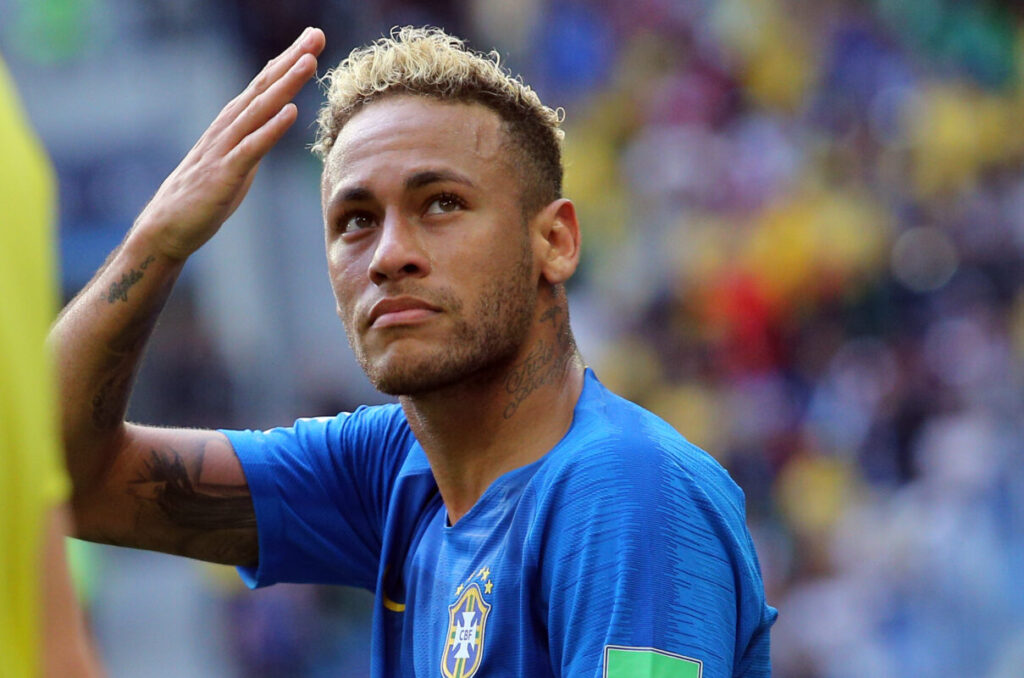
A study by the agency Content Co, which analyzed more than 20 million social media posts between January and May 2026, put numbers to that rejection. Neymar is the most mentioned player in Brazil and the third most mentioned in the world, behind only Messi and Cristiano Ronaldo. He is also the most rejected on both lists. In the Brazilian sample, 24% of mentions of him are negative, against 19% positive.
The most curious finding shows up when you look outward. Neymar’s approval is higher in the United States, Mexico, and Canada, the three countries hosting the World Cup, than in Brazil itself. The star Brazil criticizes is the same one foreigners celebrate.
His market value tells a similar story. It was 180 million euros in 2019. Today, back at Santos, he is valued at around 8 million. The Neymar brand, though, is still strong off the field, with endorsement deals, a presence in American fashion, and hundreds of millions of followers. Brazilian fans cheer the player who delivers on the field. And it has been a long time since they saw Neymar deliver.
The redemption Argentina waited for
Messi’s story with Argentina was once just as hard as Neymar’s with Brazil. For years he was called pecho frío, cold chest, the term for a player who does not feel the heat of the jersey. People said he was more Spanish than Argentine, raised in Barcelona’s youth academy from the age of 13. He lost three finals in a row, the 2014 World Cup and two Copas América, in 2015 and 2016. Frustrated, he once announced he was done with the national team.
The turn began in 2019, after yet another loss to Brazil. Messi changed his stance. He started arguing with referees, squaring up to opponents, leading in a way that recalled Diego Maradona, Argentina’s greatest idol of all time. Fans recognized something they had always wanted to see. In 2021, Argentina won the Copa América inside the Maracanã. In 2022 came the world title in Qatar. In 2024, another Copa América. Three trophies in a row.
The love that followed was total. Enzo Fernández, now a starter for the national team, wrote Messi a letter at age 15 begging him not to retire. Buenos Aires filled with murals of the number 10’s face. Argentina did not forgive Messi for being perfect. It forgave him because he finally won and showed that he bled for the shirt. That was the deal.
Endrick, and hope born again
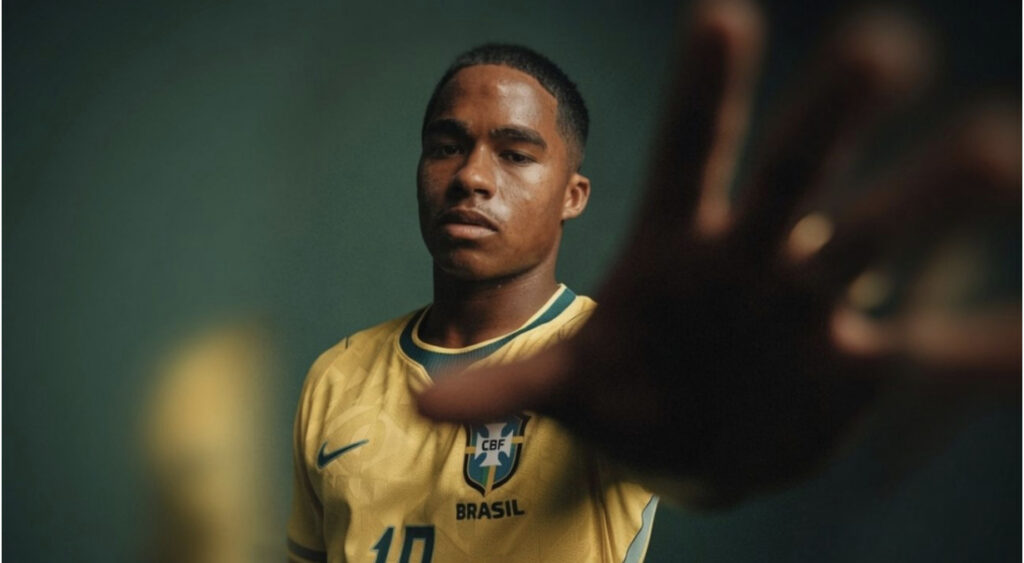
While Brazil argues about the past, a new name has appeared. Endrick is 19, spent last season on loan at Lyon from Real Madrid, and scored 8 goals with 7 assists in 21 games. In that same Content Co study, he leads the world in positive mentions, with 25% approval. The country seems ready to place in him the hope Neymar could not carry.
There is an irony in that. Endrick has not played a single minute in this World Cup, sitting on the bench against Morocco, and he already carries the weight of being the future. It is the same weight that crushed so many before him. A country that demands too much may simply be repeating the cycle, choosing a new boy to love and, later, to blame.
The love that demands
In the end, the difference between Neymar and Messi says little about who was better with the ball at his feet. It says something about two countries that love in different ways. Argentina waited for its idol to stumble, to suffer, and to come back, and embraced him when he won. Brazil demands that its star be the next Pelé or the next Ronaldo, the strikers who won its past World Cups, from the very first day. Enchant, win, never disappoint. And it treats disappointment as betrayal, almost as tragedy.
Maybe Brazil’s harshness is, deep down, a strange kind of love. A love that accepts nothing short of perfection, because it was raised to believe that Brazilians play the most beautiful football in the world. Neymar carried that dream and could not make it real. What remains to be seen is whether Brazil will ever learn to love its stars for what they are, and not only for what they failed to win.