
Carnival in Brazil officially begins on February 13, but in practice, the celebration starts much earlier. In the country’s main cities, especially Rio de Janeiro, Carnival unfolds gradually through parallel events, open samba school rehearsals, and street blocos that begin weeks before the official dates. By the time Carnival is “on the calendar,” the city is already in motion.
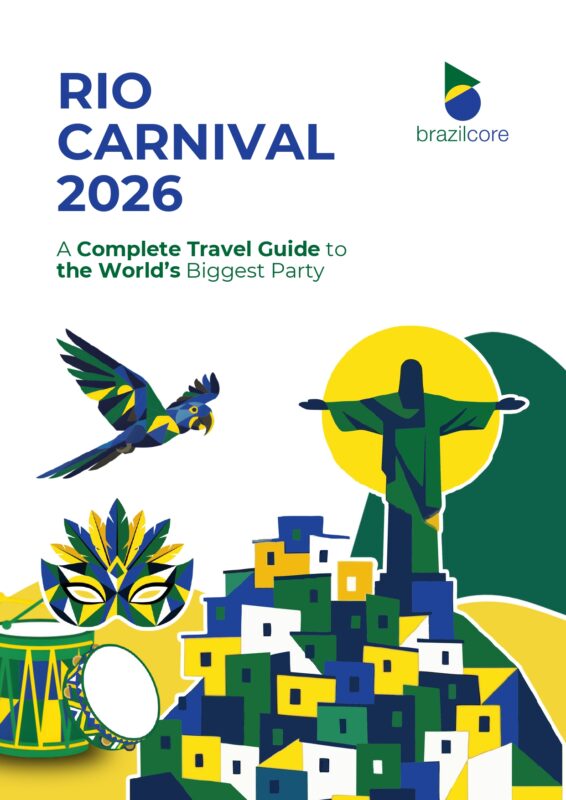
This early start is part of what makes Carnival so unique — and also what makes it challenging for visitors. With overlapping schedules and constantly shifting dynamics across the city, reliable information becomes essential. In response, Brazilcore has published a Rio Carnival 2026 guide aimed at helping international travelers understand how the celebration unfolds in practice.
Rio de Janeiro, Where Carnival Sets the Tempo
When Carnival is mentioned abroad, it is usually Rio de Janeiro that comes to mind. Officially recognized by Guinness World Records as the largest street Carnival in the world, the city becomes a massive open-air stage, with millions of people celebrating daily.
In 2026, Rio Carnival officially runs from February 13 to February 18, reaching its peak just before Ash Wednesday, with the Desfile das Campeãs closing the festivities on February 21. Long before opening day, however, samba school rehearsals welcome the public, and street blocos begin to fill the streets.
Traditional blocos such as Cordão da Bola Preta and Simpatia É Quase Amor are among the most iconic, combining history, humor, and collective energy. These free street parades are spontaneous, deeply local, and central to the Carnival experience.
The Sambadrome and Carnival at Its Highest Level

While the streets carry Carnival throughout the day, the most elaborate performances take place at the Sambódromo Marquês de Sapucaí. Inside the Sambadrome, samba schools present carefully choreographed parades featuring monumental floats, intricate costumes, and powerful percussion sections — the result of an entire year of preparation.
Understanding how the parade nights work, how to choose tickets, and what to expect inside the Sambadrome is essential for travelers who want to experience Carnival beyond the surface.
Why Accurate Information Matters
Carnival in Rio is not just a party — it is a cultural force that temporarily reshapes the city. Streets close, transportation patterns change, and events follow logics that are second nature to locals but often unclear to first-time visitors.
To address this gap, Brazilcore created an exclusive guide focused entirely on Rio Carnival 2026, designed for international travelers seeking clarity, context, and trustworthy information. The guide explains how Carnival functions in Rio — from street blocos to Sambadrome parades — while also offering practical planning advice, safety guidance, and cultural insights.
Beyond logistics and schedules, safety is a central concern for anyone experiencing Carnival in Rio for the first time. With millions of people on the streets, knowing how to move through the city responsibly makes a real difference. Brazilcore’s Rio Carnival 2026 guide includes clear safety guidelines, practical advice on what to avoid, how to prepare, and how to navigate crowded areas, along with essential emergency contacts and local resources. The goal is not to create fear, but to help travelers enjoy Carnival with awareness, confidence, and peace of mind.
An Insider Resource for Carnival 2026
As Carnival approaches — and effectively begins well before the official dates — having structured, well-researched information becomes essential. Brazilcore’s Rio Carnival 2026 guide was created to help travelers move through the city with confidence and depth, rather than guesswork.
👉 Discover the Brazilcore Rio Carnival 2026 Guide
A curated resource for foreign travelers who want to understand Carnival as it is lived in Rio — complex, joyful, and unlike anywhere else in the world.