
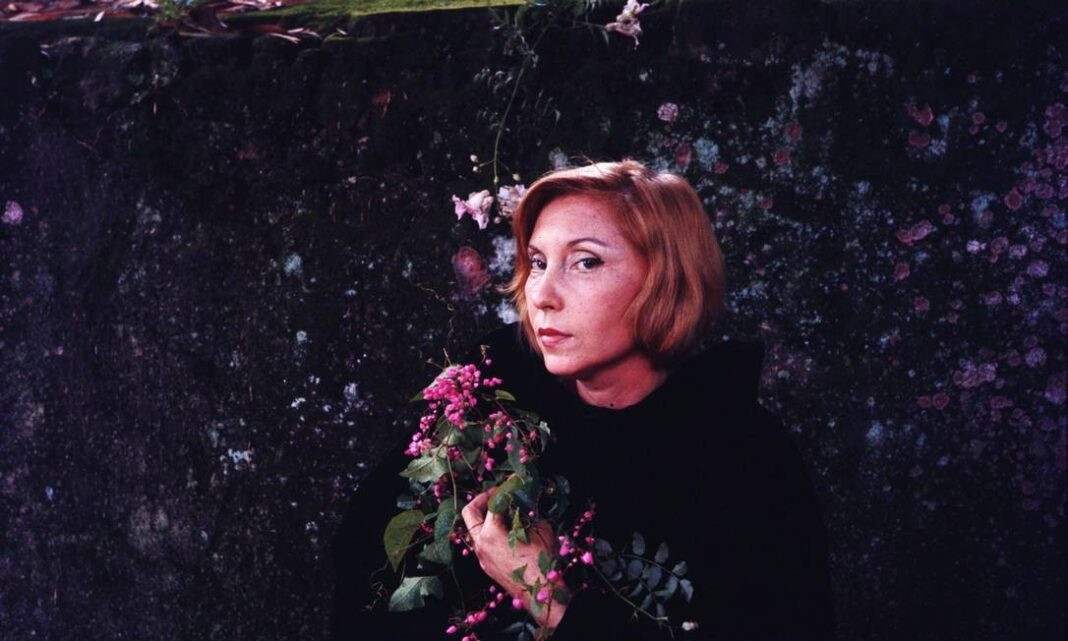
Clarice Lispector was a Ukrainian-born Brazilian writer whose radically original books transformed Brazilian literature. Nearly 50 years after her death, the author of The Hour of the Star continues to captivate readers around the world.
Scroll through social media today and you will find Clarice Lispector everywhere: quoted on Instagram, printed on tote bags, tattooed on forearms, and tucked into profile bios. A writer who died in 1977 is still being read, shared, interpreted, and debated by generations born decades after her death.
Not every quote attributed to her online is authentic. The internet has created a second Clarice: a source of comforting, inspirational phrases that she often never wrote. The real Clarice found in her books is stranger, sharper, and far less reassuring. Her writing confronts identity, desire, loneliness, and the unsettling mystery of being alive.
That readers still want her voice to speak to their own lives is no coincidence. It is one of the clearest signs that we are dealing with one of the most original literary voices Brazil — and the world — has ever produced.
From Ukraine to Brazil: A Life Shaped by Displacement
Clarice Lispector was born Haia Lispector in 1920 in Chechelnyk, a small town in what is now Ukraine, during a period of extreme upheaval in Eastern Europe. Her Jewish family fled the antisemitic violence that followed the Russian Revolution and arrived in Brazil when Clarice was just over a year old.
After first settling in Maceió, in the state of Alagoas, the family moved to Recife, where Clarice spent most of her childhood. They lived with limited means in Brazil’s culturally rich Northeast before relocating to Rio de Janeiro when she was a teenager.
Although born in Ukraine, Clarice consistently identified as Brazilian. Portuguese was not simply the language in which she wrote. It was the material she stretched, fractured, and reinvented throughout her career.
From a young age, she read voraciously. She discovered Brazilian writers such as Machado de Assis and Graciliano Ramos before turning to Dostoevsky, Virginia Woolf, James Joyce, and Katherine Mansfield. Her literary imagination formed at the intersection of places and traditions: the Brazil that became her home, the Europe her family had left behind, and a sensibility that never seemed to belong entirely to any single world.
The Novel That Changed Brazilian Literature
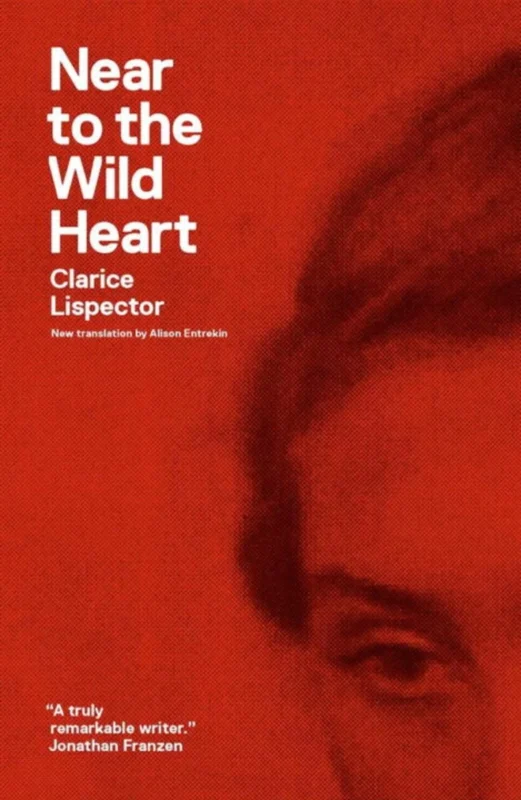
At 23, while still studying law, Clarice published her debut novel, Near to the Wild Heart in 1943. The following year, it received the prestigious Graça Aranha Prize and left Brazil’s literary establishment stunned.
The novel rejected conventional storytelling in favor of poetic, deeply introspective prose. At its center was a young woman’s search for selfhood, rendered through fragments of thought, memory, perception, and desire. It was radical territory for Brazilian fiction at the time.
Clarice did not simply introduce a memorable character or story. She proposed an entirely different way of writing a novel — one in which inner experience could be as eventful as anything happening in the external world.
Her arrival on the literary scene was so unexpected that critics struggled to explain where her voice had come from. Comparisons with Virginia Woolf and James Joyce followed, but Clarice insisted that she had not read Woolf before writing her first novel. Whatever influences readers recognized, her language was unmistakably her own.
The Writer Who Seemed Like a Sphinx
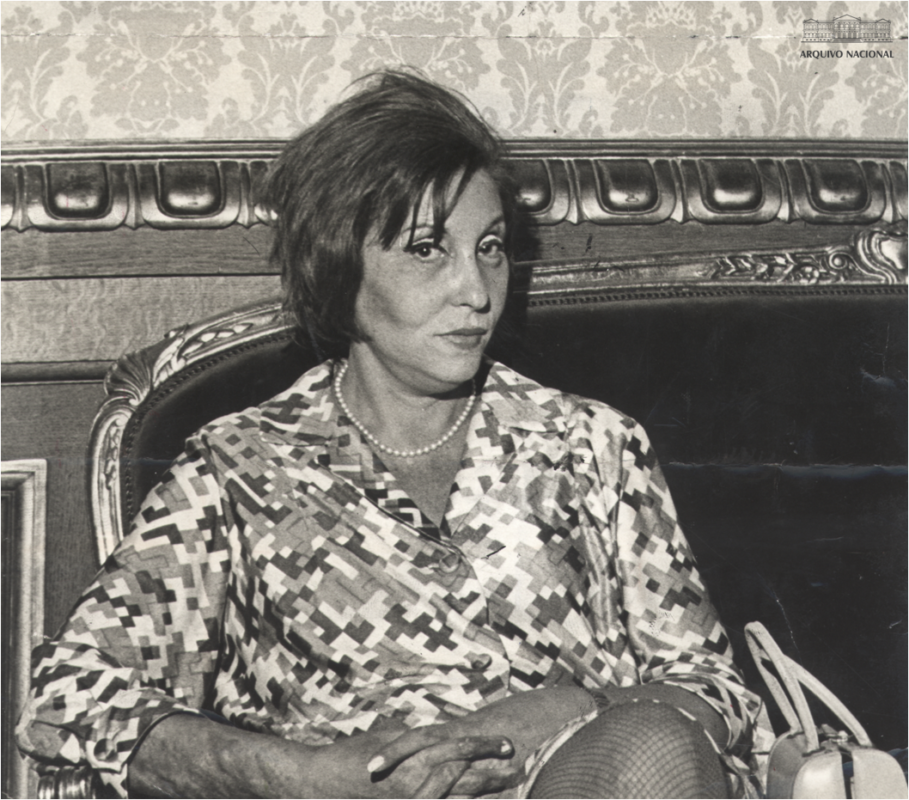
Clarice was magnetic and almost impossible to pin down.
Ferreira Gullar, one of Brazil’s most celebrated 20th-century poets, recalled being struck by her green, almond-shaped eyes, high cheekbones, and extraordinary presence. American translator Gregory Rabassa, known for translating Gabriel García Márquez and Julio Cortázar into English, famously described her as someone who “looked like Marlene Dietrich and wrote like Virginia Woolf.”
Yet Clarice resisted nearly every attempt to categorize her. She often answered interview questions in monosyllables, rejected literary labels, and deflected admiration with the same unease she brought to much of her work. The air of mystery surrounding her eventually became part of her public image, earning her comparisons to a sphinx.
After marrying Brazilian diplomat Maury Gurgel Valente, Clarice spent around 15 years living in Europe and the United States. She resided in Naples, Bern, Torquay, and Washington, D.C., but remained deeply attached to Brazil and to the Portuguese language.
In 1959, she separated from her husband, returned to Rio with their two sons, and made the city her permanent home. Some of her most important books followed, including Family Ties, The Apple in the Dark, and The Passion According to G.H.
Why Clarice Lispector’s Writing Feels So Different
French feminist philosopher Hélène Cixous compared Clarice to what Kafka might have been as a woman, or Rilke as a Jewish mother born in Ukraine. It is the kind of comparison that reveals and obscures at the same time because Clarice is, above all else, inimitable.
Her literature circles obsessively around a set of questions: Who are we beneath the identities assigned to us? Can one person ever truly know another? What happens when the ordinary life we have carefully constructed suddenly feels unfamiliar?
Many of her protagonists are middle-class urban women navigating marriage, motherhood, domestic routines, and unspoken desires. But the worlds inside them are vast. A trip to the market, a family dinner, an encounter with an animal, or a glance through a window can trigger a crisis of consciousness.
Clarice was not primarily interested in plot. Her novels have an open, rhythmic, almost musical quality, using stream of consciousness as a method and epiphany as a structure. Her short stories often begin with a seemingly ordinary event that unexpectedly opens into an existential abyss.
In “Love,” a woman riding a streetcar sees a blind man chewing gum and suddenly loses her sense of order. In “The Smallest Woman in the World,” the discovery of a tiny African woman becomes an unsettling examination of desire, possession, and the way people look at those they perceive as different. In The Passion According to G.H., an encounter with a cockroach leads a wealthy woman into a terrifying confrontation with existence itself.
Alongside João Guimarães Rosa, Clarice expanded the possibilities of Brazilian fiction, transforming the Portuguese language and placing Brazil in conversation with the boldest literary experiments of the 20th century.
The Hour of the Star
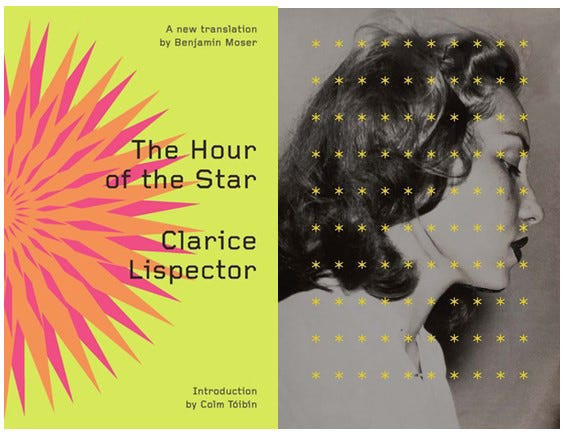
Clarice’s final novel, The Hour of the Star, was published in 1977, shortly before her death from cancer. It tells the story of Macabéa, a poor young woman from Alagoas who moves to Rio de Janeiro and works as a typist.
Macabéa is one of the countless internal migrants who left Brazil’s Northeast for larger cities during the 20th century in search of opportunity. In Rio, she occupies almost no space. She earns little, eats poorly, dreams modestly, and moves through a city that barely notices her existence.
The novel is narrated by Rodrigo S.M., a writer who struggles with the moral implications of turning Macabéa’s poverty into literature. Through him, Clarice questions not only how stories are told, but who is entitled to tell them.
The result is a meditation on dignity, invisibility, authorship, and the basic right to exist. Macabéa appears insignificant to the world around her, yet the novel insists that her life matters. That insistence still resonates with extraordinary force.
Clarice Lispector Beyond the Novels
Clarice was also a journalist, newspaper columnist, translator, and author of children’s books.
In her weekly chronicles for Jornal do Brasil, she wrote about motherhood, domestic life, animals, taxi rides, loneliness, writing, and the strangeness hidden inside ordinary days. More conversational and accessible than some of her novels, these pieces introduced a different Clarice to the Brazilian public: intimate, humorous, vulnerable, and occasionally practical.
Her columns helped make her a familiar presence beyond literary circles. Readers did not encounter her only as an enigmatic novelist but as a woman thinking aloud about money, family, beauty, fear, and the small complications of everyday life.
She also wrote under pseudonyms and produced advice columns aimed at women, navigating the expectations of Brazilian media while quietly developing the themes that would define her fiction. This tension between public convention and private freedom would remain central to her work.
Viral Before Social Media Existed

Nearly five decades after her death, Clarice Lispector remains a cultural phenomenon unlike any other Brazilian writer.
Her face has appeared on postage stamps. Her name has been borrowed by buildings and cultural institutions. Her books have been sold in vending machines in São Paulo’s subway. Online, communities continue to share, interpret, and frequently misattribute her words.
Her sentences circulate as contemporary mantras among readers who may never have finished one of her novels but still recognize something intimate in her voice. That is the paradox of Clarice: she is simultaneously difficult and popular, hermetic and viral.
The false quotations are part of that story. Many motivational phrases shared under her name bear little resemblance to the complex, destabilizing prose she actually wrote. Yet even these misattributions reveal a cultural desire for Clarice — or for an imagined version of her capable of expressing feelings that ordinary language cannot reach.
Her international readership has also continued to grow through new translations and editions. Benjamin Moser’s biography Why This World and his work overseeing new English translations helped introduce her to a broader audience. Writers, actors, and artists around the world now cite her as an influence.
At the San Sebastián International Film Festival, Australian actress Cate Blanchett named Clarice among the writers who inspire her in uncertain times. American novelist Lauren Groff, writing in The New Yorker, offered a simpler assessment: “There is no one who writes like her.”
A Legacy That Keeps Finding New Forms
Perhaps the most remarkable thing about Clarice is that her work never stays still. Decades after her death, it continues to migrate into new languages, formats, generations, and geographies.
Scholars write dissertations about her. Teenagers discover her through social media. Writers return to her prose to understand what fiction can do. Theater makers, filmmakers, visual artists, and performers find new possibilities inside stories written more than half a century ago.
The Hour of the Star has proven especially resilient. The story of Macabéa — the overlooked northeastern girl who dreams, fails, and still somehow matters — speaks to anyone who has ever felt invisible.
Clarice’s work does not simply survive on the page. It continues to move into new artistic and cultural contexts, inviting each generation to reinterpret it through its own experiences.
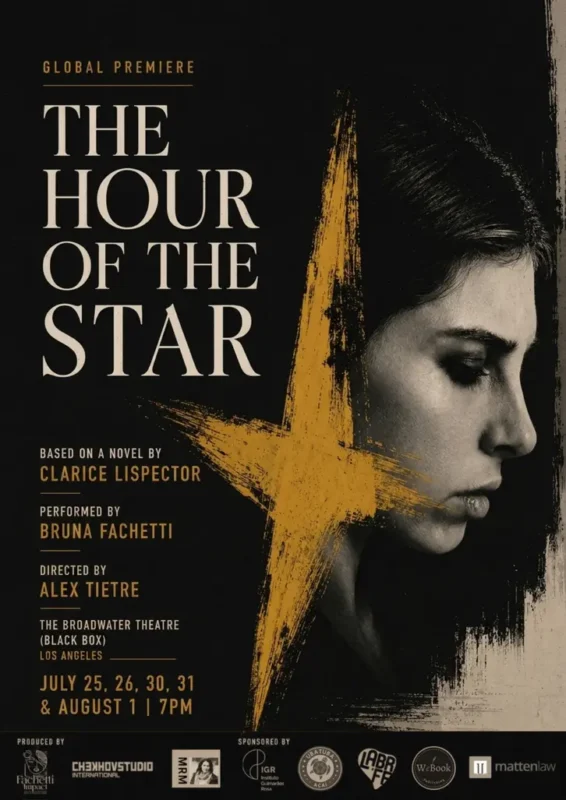
One of the latest artists to enter that conversation is Brazilian actress Bruna Fachetti, who brings The Hour of the Star to the stage in a world-premiere solo adaptation at The Broadwater, one of Los Angeles’ leading independent theater spaces.
Directed by Alex Tietre, the production features Fachetti embodying six characters through narration and physical performance. Presented primarily in English, it uses Benjamin Moser’s translation while incorporating Brazilian cultural influences and preserving the story’s distinctly Brazilian roots.
“As a Brazilian artist living abroad, I understand the feeling of invisibility and the need to be seen,” Fachetti says.
The production’s set incorporates recycled materials as a metaphor for Macabéa herself: a reminder that what society overlooks or discards can still hold beauty, meaning, and life.
That ability to inspire new interpretations is part of what makes Clarice not only a Brazilian literary treasure, but a genuinely global one. Born in Ukraine, formed in Brazil, and transformed through every language that carries her work, she continues to speak to anyone who has ever struggled to understand who they are — or longed to be seen.
See The Hour of the Star in Los Angeles
Where to Start Reading Clarice Lispector
For readers discovering Clarice for the first time, these books offer different ways into her work:
- Start with The Hour of the Star for her shortest and most accessible novel.
- Read Family Ties to discover how she transforms ordinary domestic moments into existential revelations.
- Choose Near to the Wild Heart to experience the revolutionary debut that introduced her voice to Brazil.
- Read The Passion According to G.H. for her most intense and philosophically demanding novel.
- Explore The Complete Stories for the broadest view of her evolution as a writer.

