
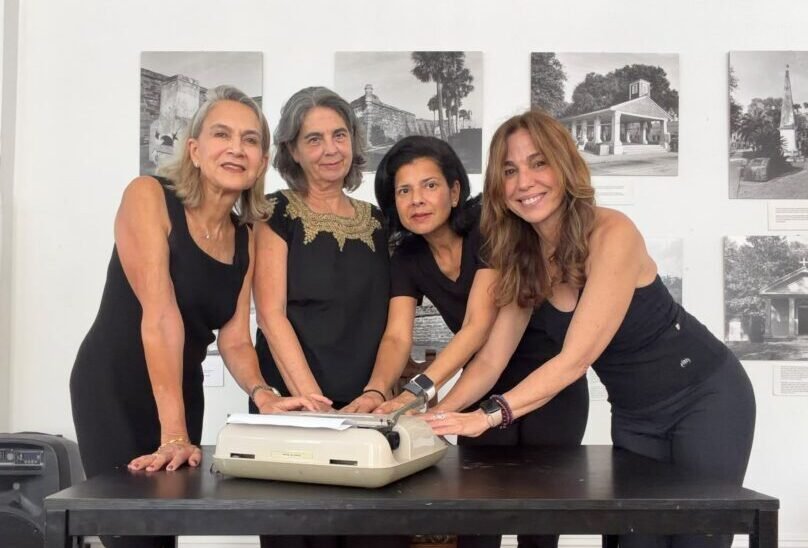
For its third edition, running November 6 to 15 in Miami, the Dionysus Brazilian Theater Festival makes explicit what its first two editions only gestured at: “The Stories We Carry: Voices of the Feminine” is this year’s theme, and every production in the lineup is built around a woman’s story, voice or interior life. The festival’s biggest commitment is a three-part strand called Clarice on Stage, which puts Clarice Lispector at the center of the week — founder Ana Bugarim’s third edition, after a 2024 monologue on art and mental health and a 2025 piece staged around five mythical and historical women, is the one where that focus becomes the festival’s whole identity.
Opening night: Bethânia’s songbook, and the feminine spirit (Nov. 6 & 8)
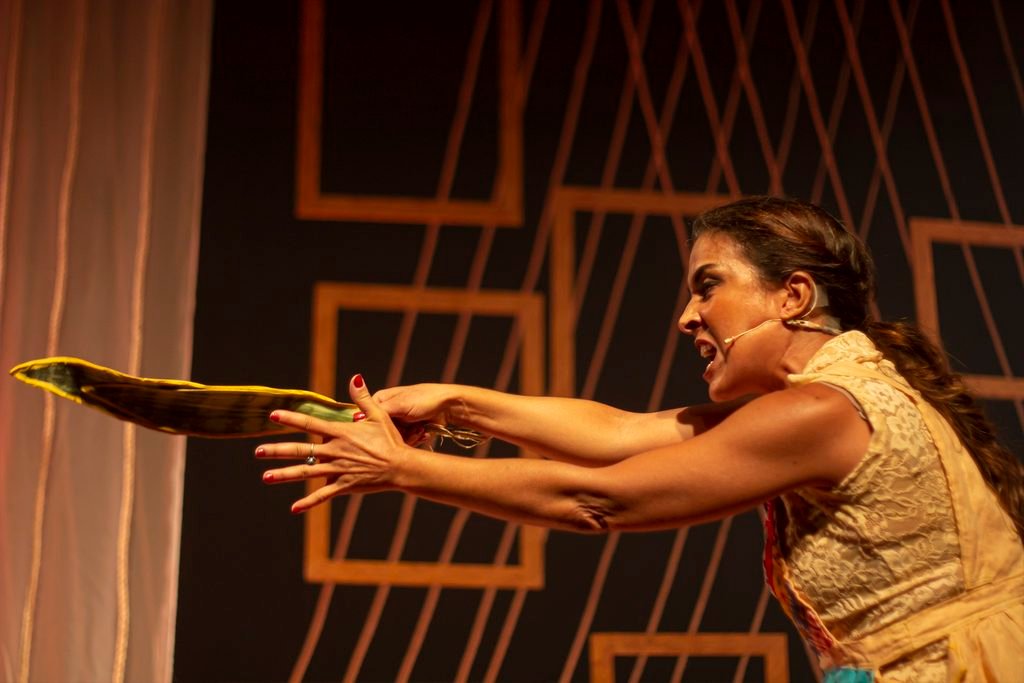
The festival opens with “Senhora dos Raios e dos Ventos,” a musical-theater piece starring Izabella Bicalho built around songs from Maria Bethânia’s catalog. Staged at the Miami Hispanic Cultural Arts Center with a post-show discussion to follow, it uses Bethânia’s repertoire to explore what the festival describes as the strength, spirituality and complexity of the feminine experience — setting the register for everything that follows.
A scholar’s take on Clarice, at the University of Miami (Nov. 11)
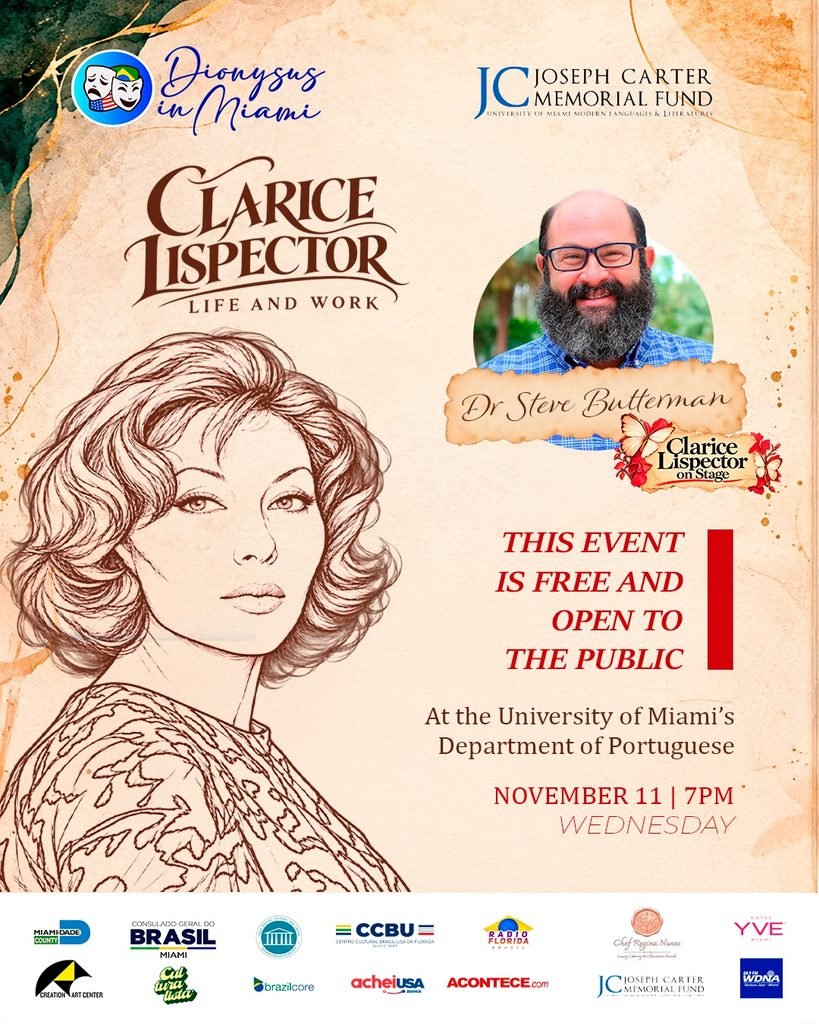
Midway through the festival, the program steps off its usual stage. At the University of Miami’s Department of Modern Languages and Literatures, Dr. Steven Butterman leads a free, public conversation on Clarice Lispector’s life, work and legacy. It’s the one entry in Clarice on Stage that isn’t performance — a chance to hear her writing discussed by someone who studies it, in the middle of a week built around people performing it.
Macabéa takes the English-language stage (Nov. 14)
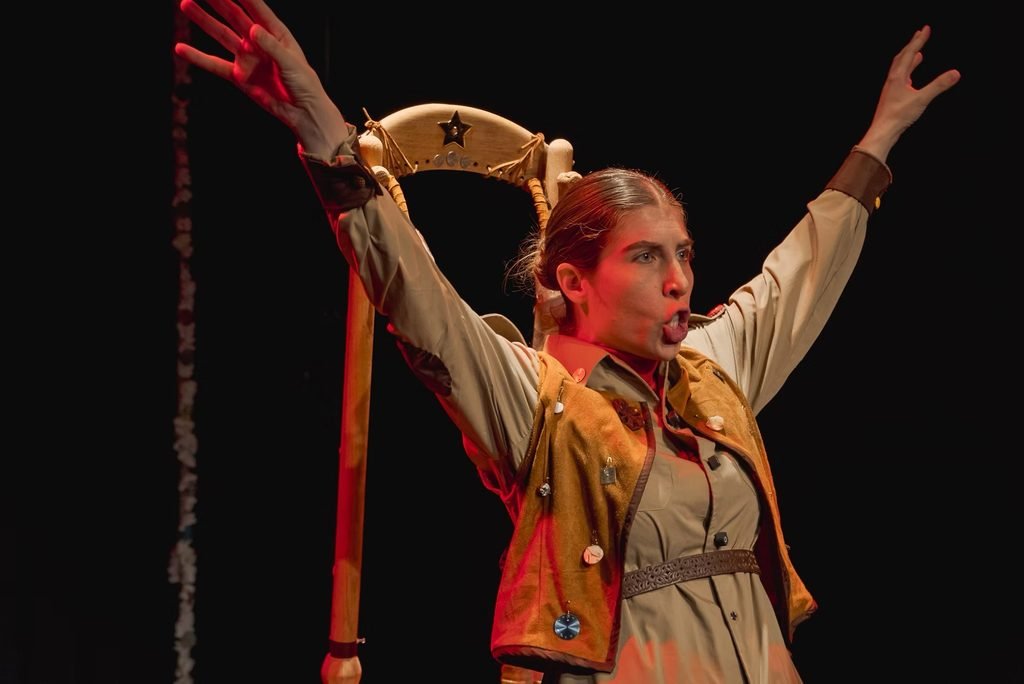
The centerpiece of Clarice on Stage is a staging of The Hour of the Star, Lispector’s 1977 novel and the last she published before her death. Brazilian actress Bruna Fachetti plays Macabéa, a poor young typist who has migrated from Brazil’s Northeast to Rio de Janeiro — a character the book insists matters, even as its narrator, a writer named Rodrigo S.M., openly struggles with the ethics of turning her poverty into literature. (Brazilcore wrote about Lispector’s own life, from her birth in what is now Ukraine to her arrival in Brazil as an infant, in an earlier piece.)
It isn’t Fachetti’s first run with the role. Directed and conceived by Alex Tietre and built on Benjamin Moser’s English translation, the solo adaptation debuted this past July at The Broadwater in Los Angeles, where Fachetti moved through six characters using narration and physical performance alone, on a set built from recycled materials meant to echo Macabéa’s own social invisibility. “As a Brazilian artist living abroad, I understand the feeling of invisibility and the need to be seen,” Fachetti said at the time — a line that lands differently now that the production is playing for a Brazilian diaspora audience in Miami rather than Los Angeles. It’s presented in English, with written Portuguese translation available, at the Miami Hispanic Cultural Arts Center.
Closing the festival inside Clarice’s short stories (Nov. 15)

The festival’s final night folds Lispector’s fiction into the visual arts. “Clarice on Stage: An Immersive Theatrical Experience” stages dramatic readings of three of her short stories in dialogue with original artwork by visual artist Silvana Soriano — an attempt, per the festival’s own description, to blur the line between performer, text, artwork and audience, closing out a week that opened with a very different kind of feminine voice in Bethânia’s.
What to know before you go
- Dates: November 6–15, 2026
- Main venue: Miami Hispanic Cultural Arts Center, 111 SW 5th Avenue, Miami (the University of Miami conversation is held on campus)
- Language: Performances are in Portuguese with English translation, except The Hour of the Star, which is in English with Portuguese translation
- Tickets: Available at braziliantheaterfest.org
- Contact: info@braziliantheaterfest.org / +1 (954) 242-0378