
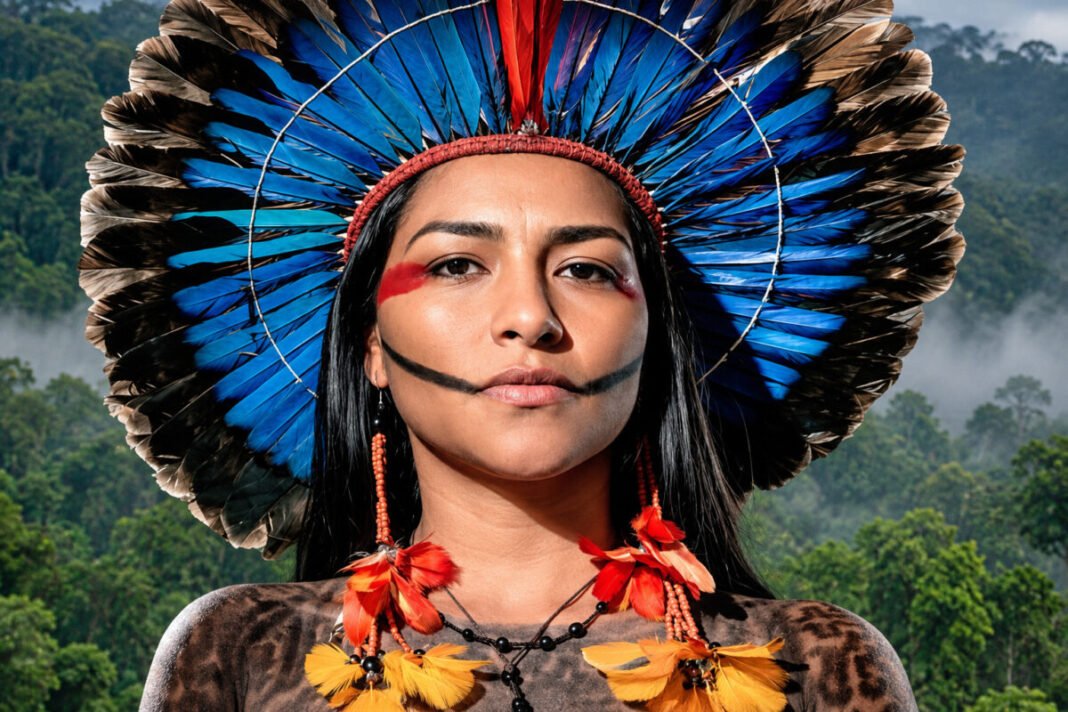
Leonardo DiCaprio has spent years using his name and production company, Appian Way, to bring global attention to the natural world. Now, one of those films is available to everyone. On September 5, to mark Amazon Day, DiCaprio released the full documentary Yanuni on his YouTube channel, where it can be watched for free.
Produced by DiCaprio and directed by Austrian filmmaker Richard Ladkani, Yanuni follows Brazilian Indigenous leader Juma Xipaia across five turbulent years of her life. The film captures her rise from a village in the Middle Xingu region to the front lines of national politics, while documenting death threats, anti-mining operations, motherhood and the personal cost of defending the Amazon.
The documentary had already built an impressive international profile before reaching YouTube. It closed the Tribeca Festival in June 2025, won Best Documentary Feature at the SCAD Savannah Film Festival and received top honors at the Jackson Wild Media Awards. It was also one of 15 films shortlisted for Best Documentary Feature at the 98th Academy Awards, although it did not advance to the final five nominees.
Those achievements helped put the film on the international radar. But Yanuni matters for a more fundamental reason: it places a Brazilian Indigenous woman at the center of her own story.
Who is Juma Xipaia?

Born in 1991 in the Xipaya village of Tukamã, in Pará, Juma Xipaia became involved in activism as a teenager after witnessing the threats facing Indigenous lands and neighboring communities.
She later moved to Altamira, studied law in Belém and is now also pursuing a medical degree at the Federal University of Pará. At 24, she became the first woman elected cacica — or chief — in the Middle Xingu region, assuming a leadership role that had never before been held by a woman.
Her activism gained national attention through her opposition to the Belo Monte hydroelectric dam. Xipaia has argued that the project moved forward without meaningful consultation with the Indigenous communities whose territories and livelihoods it would affect.
Speaking out came at an enormous cost. She faced repeated threats and survived multiple attempts on her life. In 2017, she temporarily left Brazil for Switzerland, where she addressed the United Nations and formally denounced the violence targeting Indigenous communities and environmental defenders in the Amazon.
She ultimately returned to Brazil, unwilling to remain separated from her children and her territory. In 2020, she founded Instituto Juma, an organization focused on Indigenous autonomy, territorial protection and cultural revitalization.
Following Luiz Inácio Lula da Silva’s return to the presidency, Xipaia became Brazil’s first Secretary of Articulation and Promotion of Indigenous Rights. The position allowed her to help develop public policy from within the federal government while continuing to advocate for policies created with — rather than merely for — Indigenous communities.
The growing international recognition of her work was clear when Britain’s The Telegraph published an extensive profile timed to the documentary’s free release. Under the striking headline “DiCaprio’s Amazonian warrior queen,” the newspaper traced the threats, protests and personal sacrifices behind her activism. While the framing leaned on DiCaprio’s global celebrity, the story itself gave Xipaia the space usually reserved for figures already familiar to an international audience.
That attention is significant. For decades, foreign coverage has often treated the Amazon as an abstract environmental symbol or a dramatic landscape under threat. Yanuni offers something more specific: a named protagonist whose political choices, family and future are inseparable from the forest she is fighting to defend.
An Amazon story filmed like a political thriller
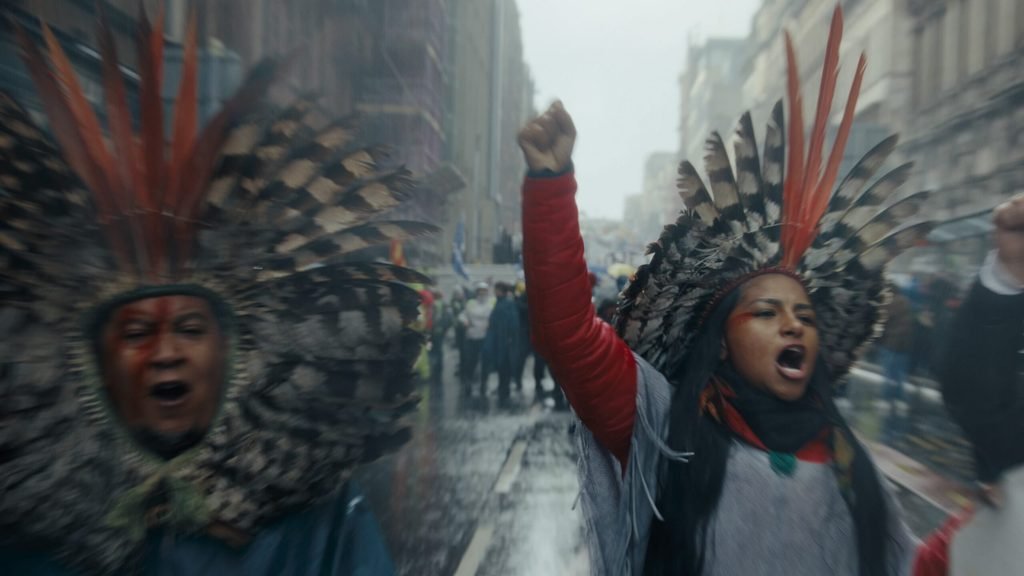
Yanuni does not approach the Amazon as a conventional nature documentary.
The film begins with archival footage of Xipaia as a teenager in 2009, already speaking publicly about the defense of Indigenous territory. From there, it follows her through protests, political transformation and six attempts on her life.
Her husband, Hugo Loss, is also central to the story. A federal environmental agent, Loss leads high-risk operations against illegal gold miners working inside protected areas. His raids bring the physical danger of environmental enforcement into the film, while Xipaia’s public role reveals the political risks behind the same struggle.
The documentary is named after their daughter, Yanuni, who was born during production. Her arrival gives the story its emotional core and turns the couple’s activism into something deeply personal: a fight over the kind of Amazon their child will inherit.
Reviewing the film after its Tribeca premiere, Variety described Yanuni as both a political thriller and a work of visual poetry. Ladkani’s sweeping aerial photography presents the rainforest not simply as a backdrop but as a living presence within the story.
The film also borrows the tension and visual language of war cinema. Here, however, the territory is being defended by an Indigenous woman, local communities and environmental agents confronting illegal mining, land grabbing and political pressure.
That combination makes Yanuni more than a portrait of an activist. It shows how environmental destruction operates on the ground — through armed invasions, government decisions, intimidation and the people willing to risk their lives in response.
Why Yanuni is now free to watch
Making the documentary freely available dramatically expands its potential audience beyond film festivals, awards screenings and traditional distribution platforms.
Ladkani has said that the goal is for Xipaia’s story to reach as many people as possible. Releasing the film on Amazon Day reinforces that intention: Yanuni is being presented not only as a documentary to watch, but as a call for wider attention to the people defending the rainforest.
For Xipaia, that urgency is inseparable from the current condition of the Amazon. She has expressed hope that the film will cross borders, raise awareness and inspire people to act before further destruction becomes irreversible.
DiCaprio’s involvement inevitably helps carry that message. His name attracts audiences, press coverage and awards attention that an independent environmental documentary might otherwise struggle to secure. But once the film begins, the celebrity connection becomes secondary.
The voice, risks and story belong to Juma Xipaia.
How to watch Yanuni
Yanuni runs approximately 112 minutes and is now streaming free on Leonardo DiCaprio’s YouTube channel.
The documentary is primarily in Portuguese and Indigenous languages, with English subtitles available.