
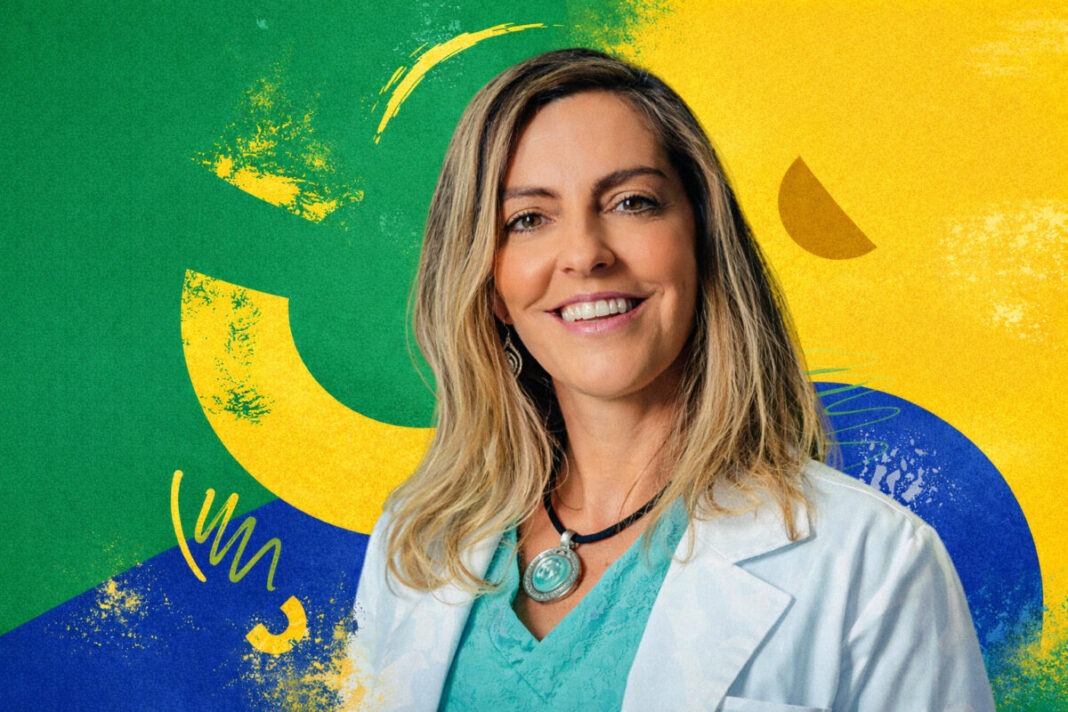
Brazilian scientist Tatiana Coelho de Sampaio, a professor at the Universidade Federal do Rio de Janeiro (UFRJ), is leading research that could redefine how medicine approaches spinal cord injuries—conditions long considered irreversible. Her work, centered on a molecule known as polylaminin, has already enabled patients with paraplegia and tetraplegia to regain partial or significant movement, drawing international attention from the scientific community and prompting speculation about future recognition at the level of the Nobel Prize in Physiology or Medicine.
The research challenges decades of medical consensus by demonstrating that damaged neurons in the spinal cord may be stimulated to reconnect and regenerate under specific biological conditions. While the treatment remains experimental, early clinical results have positioned the Brazilian study among the most promising advances in regenerative medicine worldwide.
A molecule that changes the paradigm
After nearly 30 years of investigation, Sampaio coordinated the development of polylaminin, an experimental protein that acts directly at the site of spinal cord injury. Often described by researchers as a “biological glue,” the molecule creates an environment conducive to axonal growth and neural reconnection.
Polylaminin is derived from proteins extracted from the human placenta, which play a critical role in the formation of the nervous system during embryonic development. When injected into the injured region of the spinal cord, the substance appears to reorganize neural circuits previously thought to be permanently disrupted.
“This is not about repairing nerves mechanically,” Sampaio has said in interviews. “It’s about recreating the biological conditions that allow neurons to reconnect.”
Clinical trials and regulatory milestones
The treatment is being developed in partnership with Brazilian pharmaceutical company Cristália and has reached a significant regulatory milestone. Earlier this year, Brazil’s health authority, Anvisa, approved Phase 1 clinical trials, which focus on safety and early signs of efficacy. Two additional phases will be required before any potential commercialization, a process that could take several years.
Despite its experimental status, at least 16 Brazilian patients have received the treatment through court-authorized injunctions. Of these, at least five have shown partial recovery of movement—an outcome considered unprecedented in cases of severe spinal cord injury.
Patients regaining movement
The first patient treated was Luiz Fernando Mozer, 37, who became tetraplegic after a motocross accident in the state of Espírito Santo. Less than 48 hours after receiving polylaminin, he reported the return of sensation and the ability to contract muscles in his thighs and anal region.
Other cases include a 35-year-old man who regained movement in his foot and sensation in his legs following a motorcycle accident, and Bruno Drummond de Freitas, 31, who reportedly recovered the ability to walk after being diagnosed with tetraplegia. Improvements were also observed in patients Diogo Barros Brollo, 35, and a 24-year-old man injured in a waterfall accident. All procedures were carried out under specialized medical supervision, including coordination by neurosurgeon Bruno Alexandre Côrtes at Rio de Janeiro’s Souza Aguiar Municipal Hospital.
A discreet scientist, global impact
Despite the growing international attention, Sampaio maintains a notably low public profile. At 59, she avoids social media, sleeps an average of six hours per night, and balances her scientific career with family responsibilities, including caring for a young orphan from Maranhão.
“I prefer real life,” she has said. “Living will always be my first choice.”
Specialists consider the discovery of polylaminin one of the most significant achievements in Brazilian medicine in recent decades. By restoring movement—and hope—to patients previously deemed permanently paralyzed, the research places Brazil at the center of a global scientific debate on neural regeneration.
While definitive conclusions will depend on the completion of clinical trials, the work led by Tatiana Coelho de Sampaio already represents a rare convergence of scientific rigor, medical innovation, and tangible human impact—an achievement that continues to resonate far beyond Brazil’s borders.