
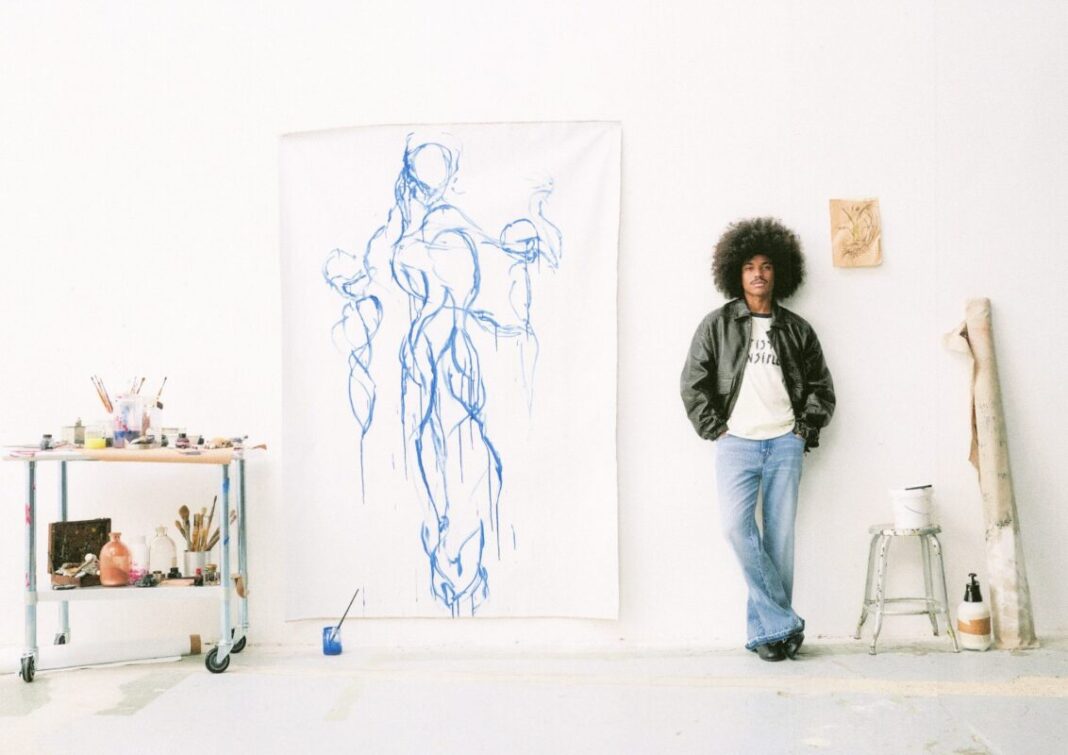
Brazil continues to shape global aesthetics in subtle but undeniable ways—and this time, it shows up inside one of the world’s most recognizable fashion retailers. Zara has launched the first chapter of a new collaboration series with Brazilian artists, starting with Samuel de Saboia.
It’s not just a capsule. It’s a translation of personal identity into wearable form.
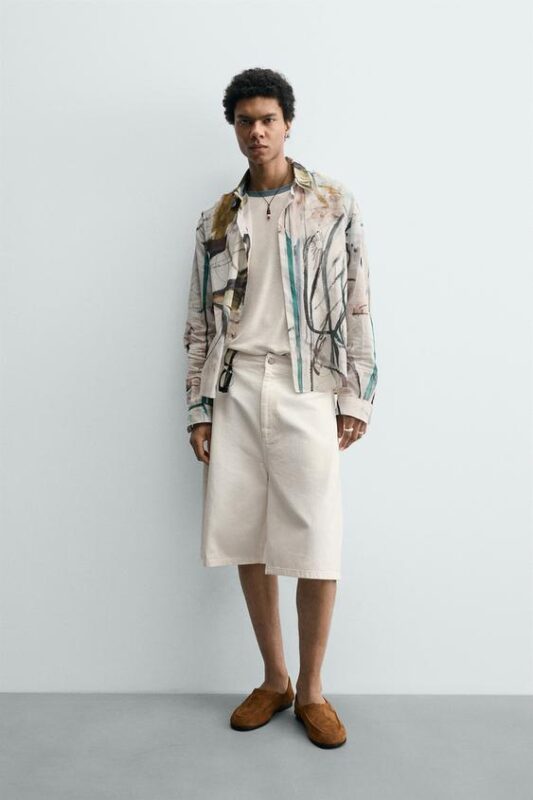
The collection draws heavily from 1970s silhouettes—think slightly flared denim, fitted striped tees, above-the-knee shorts, and outerwear that leans into volume, from leather jackets to tailored wool coats. It’s retro, but not nostalgic. The pieces feel edited, intentional, and grounded in the present.
What sets this collaboration apart is how closely it mirrors Saboia’s own life. Some garments are direct reinterpretations of items from his personal wardrobe, including a shirt originally owned by his grandmother. Others borrow from his studio practice, incorporating functional details like brush pockets—subtle, but telling.
Wearing the artist’s process
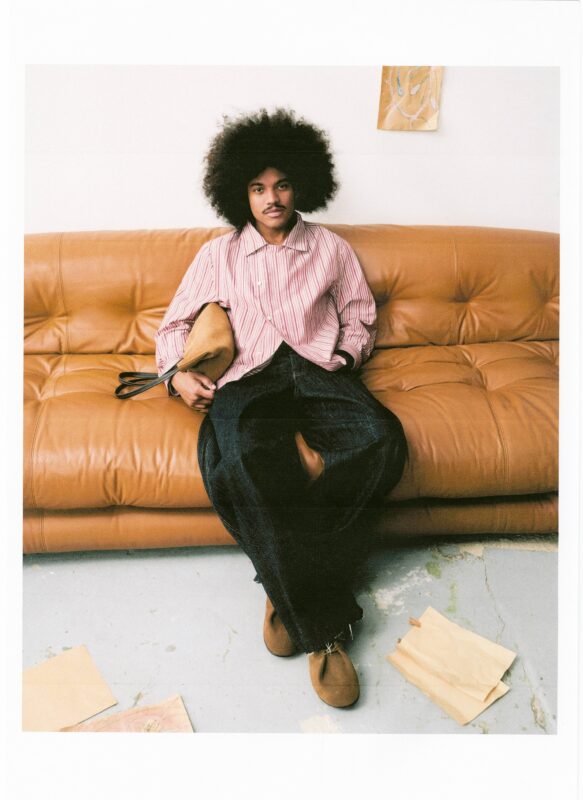
Born in Recife, in Brazil’s Northeast, Samuel de Saboia operates across disciplines, moving between visual art, fashion, and music. His work is marked by a strong narrative sensibility, where painting, textile, and sound coexist as extensions of the same creative universe.
Over the past few years, Saboia has gained international visibility through exhibitions in Europe and collaborations that position him within a new generation of Brazilian artists expanding beyond traditional formats. His transition into fashion feels less like a pivot and more like a natural expansion—transforming garments into another medium for storytelling.
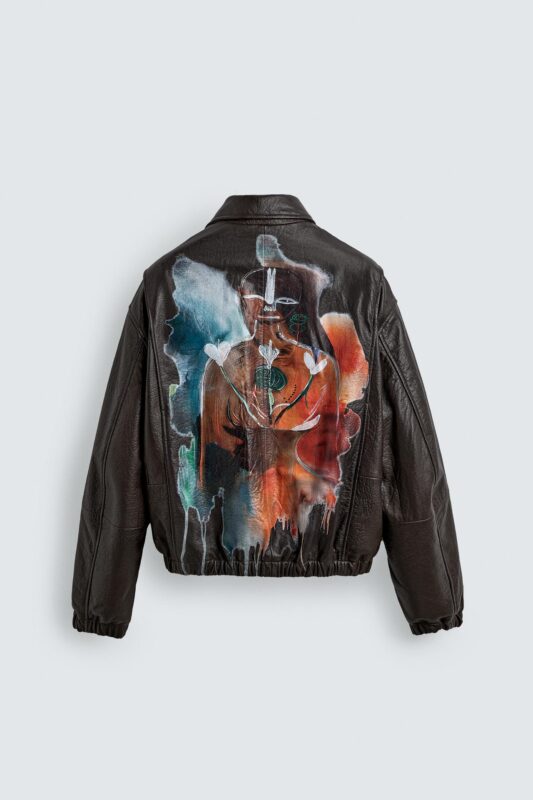
His visual language carries through the entire line. Prints, embroideries, and jacquards echo his paintings—sometimes quietly placed, sometimes taking over the garment. The result is a collection that doesn’t just reference art, but behaves like it.
Accessories deserve their own spotlight: rounded shoes and two statement bags anchor the collection, reinforcing the balance between functionality and expression.
A global brand, a Brazilian lens
There’s a bigger picture here. For Zara, this marks more than a localized drop—it signals a deeper investment in Brazil as a creative force. For Brazil, it’s another moment where its cultural output moves outward, influencing how global fashion is imagined and consumed.
And for those paying attention, it’s part of a pattern: Brazilian creativity is no longer being adapted for the world. It’s being presented on its own terms.
If you’re in Brazil, don’t miss it
The collection is currently available in selected stores across Brazil and through Zara’s local e-commerce—but not in the U.S., at least for now.
Which makes this one of those insider moments.
If you’re traveling to Brazil, consider this your cue. Pieces like these don’t tend to stay on racks for long—and more importantly, they carry something harder to replicate: context.