
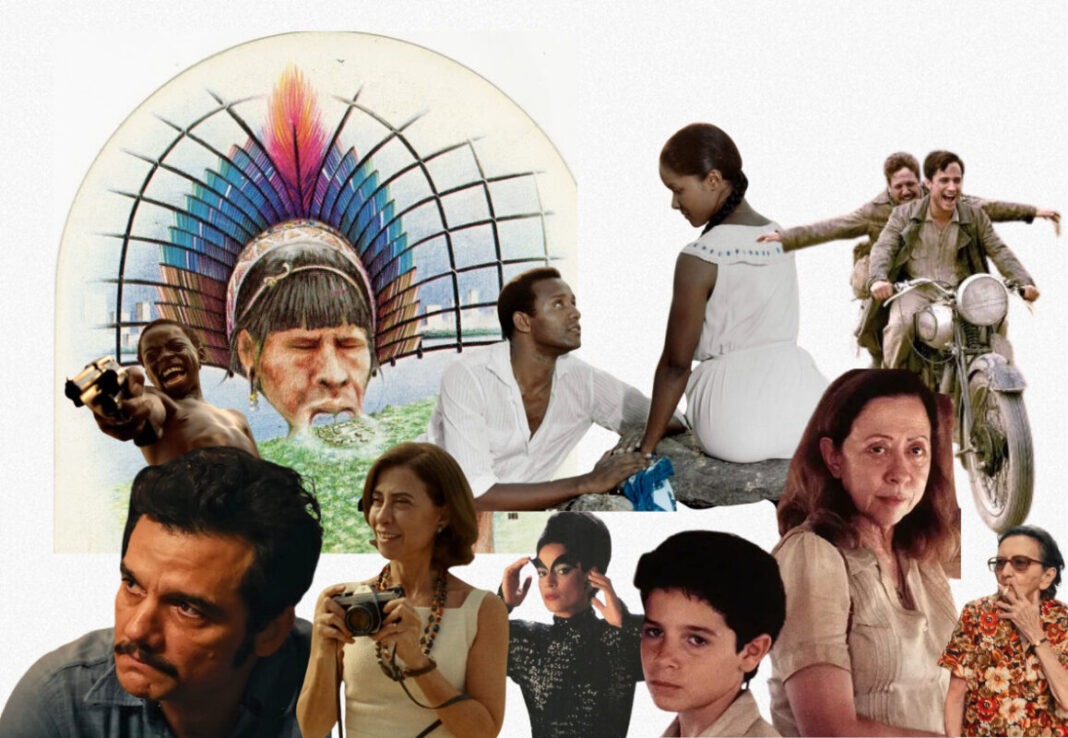
As the 2026 Academy Awards approach, Brazil once again finds itself at the center of global cinema. Just one year after the historic victory of I’m Still Here (2024), directed by Walter Salles, the Brazilian film industry returns to Hollywood’s spotlight with another strong contender: The Secret Agent (2025), by Kleber Mendonça Filho.
If the film wins on March 15, 2026, Brazil could achieve a rare milestone in Academy Awards history: two consecutive wins for Best International Feature Film. In nearly a century of Oscars, this has happened only four times.
Brazil’s relationship with the Academy, however, dates back much further. The first Brazilian name ever nominated appeared in 1945, when composer Ary Barroso received a nomination for Best Original Song for “Rio de Janeiro,” written for the Hollywood musical Brazil (1944).
It would take another fifteen years before a Brazilian co-production reached the Academy Awards as a film nominee, and even longer for fully Brazilian productions to become regular contenders. Over the decades, Brazilian cinema has appeared in multiple Oscar categories — from international feature and documentary to animation, acting, and music.
From Black Orpheus to Central Station, City of God,, and now The Secret Agent, Brazil’s journey at the Oscars tells the story of a national cinema that gradually earned its place on Hollywood’s biggest stage. Some of these films are even available to watch for free on YouTube — links below.
A Brief History of Brazilian Films at the Oscars
1960 — Black Orpheus (Orfeu Negro)
Released in 1959, Black Orpheus is an Italian-French-Brazilian co-production directed by Marcel Camus. Despite the multinational production, the film is deeply rooted in Brazilian culture.
Based on the play Orfeu da Conceição by Vinícius de Moraes, the story adapts the Greek myth of Orpheus and Eurydice to the vibrant setting of Carnival in a Rio de Janeiro favela. The film was shot in Portuguese and features a soundtrack by Antônio Carlos Jobim and Luís Bonfá.
At the 1960 Oscars, it won the award for Best Foreign Language Film (the category now known as Best International Feature Film). However, the award was officially credited to France, since the French production company held the majority stake in the film.
For this reason, it is not considered Brazil’s first official Oscar win, despite its strong Brazilian identity.
1963 — The Given Word (O Pagador de Promessas)
Often regarded as the first fully Brazilian film nominated for an Oscar, The Given Word (1962) was written and directed by Anselmo Duarte.
The film follows Zé do Burro, a humble man who promises to carry a wooden cross from the countryside of Bahia to the city of Salvador after his donkey survives a lightning strike.
The film competed for Best Foreign Language Film at the 1963 Oscars, but ultimately lost to the French film Sundays and Cybèle (Les dimanches de Ville d’Avray).
1979 — Raoni
The next Brazilian nomination came in 1979 with Raoni (1978), a Belgian-French-Brazilian documentary directed by Luiz Carlos Saldanha and Jean-Pierre Dutilleux.
The film follows Raoni Metuktire, a Kayapó Indigenous leader, as he advocates for the preservation of the Xingu Indigenous Park during Brazil’s military dictatorship.
Interestingly, the version nominated for the Best Documentary Feature Oscar was the American cut narrated by Marlon Brando, rather than the version originally released in Brazil. The award ultimately went to the American documentary Scared Straight! (1978).
1986 — Kiss of the Spider Woman (O Beijo da Mulher Aranha)
The Brazilian-American co-production Kiss of the Spider Woman (1985), directed by Hector Babenco, received four Oscar nominations.
Set during Brazil’s military dictatorship, the story follows two prisoners: a left-wing political activist and a gay hairdresser who escapes reality by recounting elaborate stories about classic films.
The film earned nominations for Best Picture, Best Director, Best Adapted Screenplay, and Best Actor, with William Hurt winning the latter.
The cast included Raúl Juliá and Brazilian actress Sônia Braga, and much of the film was shot in São Paulo.
1996 — The Quatrilho (O Quatrilho)
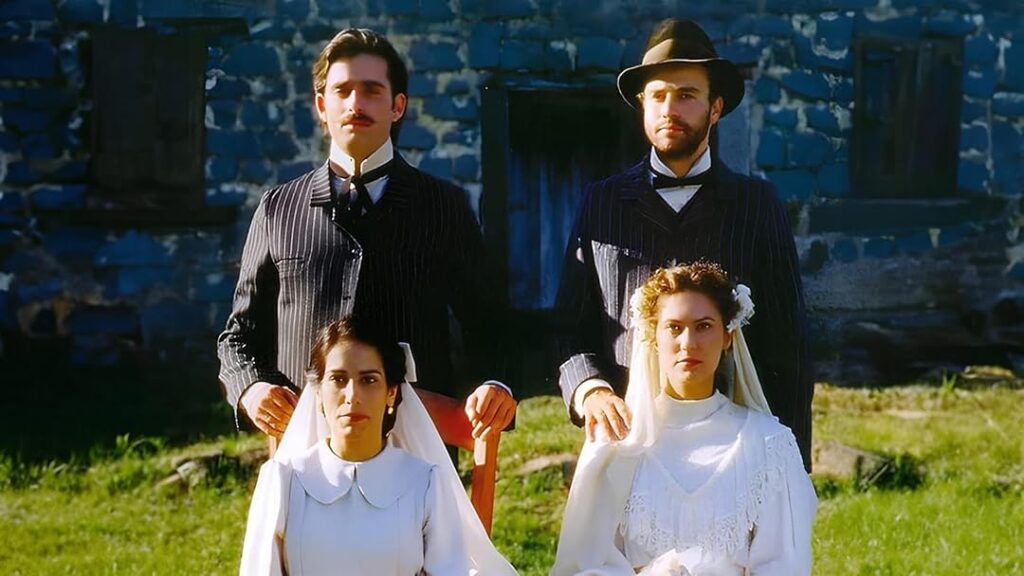
Directed by Fábio Barreto, The Quatrilho (1995) was nominated for Best Foreign Language Film at the 1996 Oscars.
Starring Glória Pires and Patrícia Pillar, the film tells the story of two Italian immigrant couples who settle in rural Rio Grande do Sul—only to become entangled in a complex romantic relationship that turns a love triangle into a “quadrangle.”
1998 — Four Days in September (O Que É Isso, Companheiro?)
In 1998, Brazil returned to the Oscar race with Four Days in September (1997), directed by Bruno Barreto.
The film recounts the 1969 kidnapping of Charles Burke Elbrick, the United States ambassador to Brazil, by left-wing revolutionaries during the military dictatorship.
It competed for Best Foreign Language Film, marking another moment of international recognition for Brazilian storytelling.
1999 — Central Station (Central do Brasil)
Walter Salles’ Central Station (1998) became one of the most celebrated Brazilian films in Oscar history.
The film was nominated for Best Foreign Language Film, and its lead actress Fernanda Montenegro received a nomination for Best Actress, becoming the first Brazilian performer ever nominated in the category.
Montenegro played Dora, a retired teacher who writes letters for illiterate people at Rio de Janeiro’s Central Station and ends up helping a young boy search for his father in Brazil’s Northeast.
The film lost the international category to Life Is Beautiful (1997), while the Best Actress award went to Gwyneth Paltrow for Shakespeare in Love (1998).
2001 — A Soccer Story (Uma História de Futebol)
Brazil reached the Oscars again with the short film A Soccer Story (1998), directed by Paulo Machline.
The film competed for Best Live Action Short Film and offers a fictionalized portrait of Pelé’s childhood, narrated through the memories of one of his friends.
2004 — City of God (Cidade de Deus)
One of the most internationally acclaimed Brazilian films ever made, City of God (2002) received four Oscar nominations in 2004:
- Best Director (Fernando Meirelles)
- Best Adapted Screenplay
- Best Cinematography
- Best Film Editing
Based on the novel by Paulo Lins, the film chronicles the rise of organized crime in the Cidade de Deus neighborhood in Rio de Janeiro.
Although it did not win any awards, the film became a landmark of Brazil’s Cinema da Retomada period.
2005 — The Motorcycle Diaries (Diários de Motocicleta)
Walter Salles returned to the Oscars with The Motorcycle Diaries (2004), a multinational co-production that includes Brazil among its participating countries.
The film received nominations for Best Adapted Screenplay and Best Original Song.
The latter was awarded to “Al Otro Lado del Río,” composed by Jorge Drexler, marking the film’s Oscar victory.
2011 — Waste Land (Lixo Extraordinário)
The documentary Waste Land (2010), directed by Lucy Walker, Karen Harley, and João Jardim, was nominated for Best Documentary Feature.
The film follows Brazilian artist Vik Muniz as he collaborates with waste pickers working in the massive Jardim Gramacho landfill near Rio de Janeiro.
It ultimately lost to the American documentary Inside Job (2010).
2015 — The Salt of the Earth (O Sal da Terra)
In 2015, the documentary The Salt of the Earth (2014) received a nomination for Best Documentary Feature.
Directed by Juliano Salgado and Wim Wenders, the film portrays the life and work of Brazilian photographer Sebastião Salgado, one of the most influential photojournalists of his generation.
The award went instead to Citizenfour (2014).
2016 — Boy and the World (O Menino e o Mundo)
Brazil reached a new milestone with Boy and the World (2013), directed by Alê Abreu.
The film became the first Brazilian animated feature nominated for an Oscar, competing in the category of Best Animated Feature.
It lost to Pixar’s Inside Out (2015).
2020 — The Edge of Democracy (Democracia em Vertigem)
Filmmaker Petra Costa earned a nomination for Best Documentary Feature with The Edge of Democracy (2019).
The film explores Brazil’s political turmoil—from the 2013 protests to the impeachment of President Dilma Rousseff in 2016—through a deeply personal lens.
The Oscar went to American Factory (2019).
Brazil’s Historic Oscar Win
2025 — I’m Still Here (Ainda Estou Aqui)
Brazil finally achieved a historic breakthrough in 2025.
Walter Salles’ I’m Still Here (2024), based on the book by Marcelo Rubens Paiva, tells the story of Eunice Paiva, whose husband Rubens Paiva disappeared during Brazil’s military dictatorship.
The film received three nominations:
- Best Picture
- Best International Feature Film
- Best Actress (Fernanda Torres)
With its victory in Best International Feature Film, the movie delivered Brazil’s first fully Brazilian Oscar win in the category.
Brazil at the 2026 Oscars
The Secret Agent (O Agente Secreto)
Now Brazil returns to the Oscar stage with The Secret Agent (2025), directed by Kleber Mendonça Filho.
The political thriller stars Wagner Moura as Marcelo, a fugitive hiding in Recife during Brazil’s military dictatorship in 1977.
The film received nominations for:
- Best Picture
- Best International Feature Film
- Best Casting
- Best Actor (Wagner Moura)
The 98th Academy Awards ceremony will take place on March 15, 2026, at the Dolby Theatre in Los Angeles, and will be broadcast live by TNT and HBO Max.